
Haw Jelly (Hawthorn)
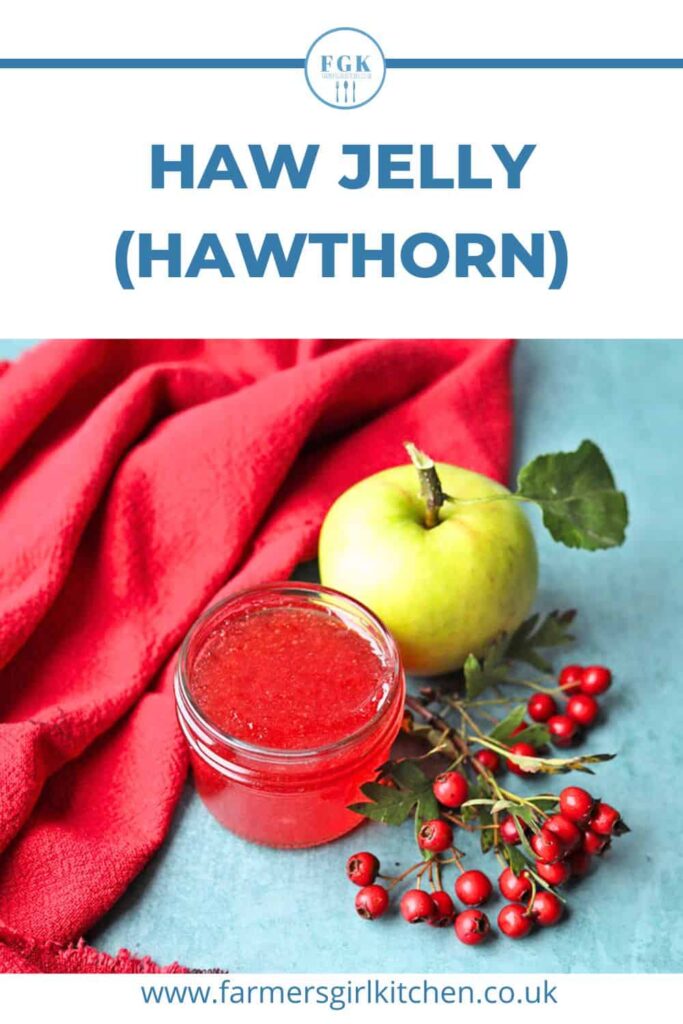
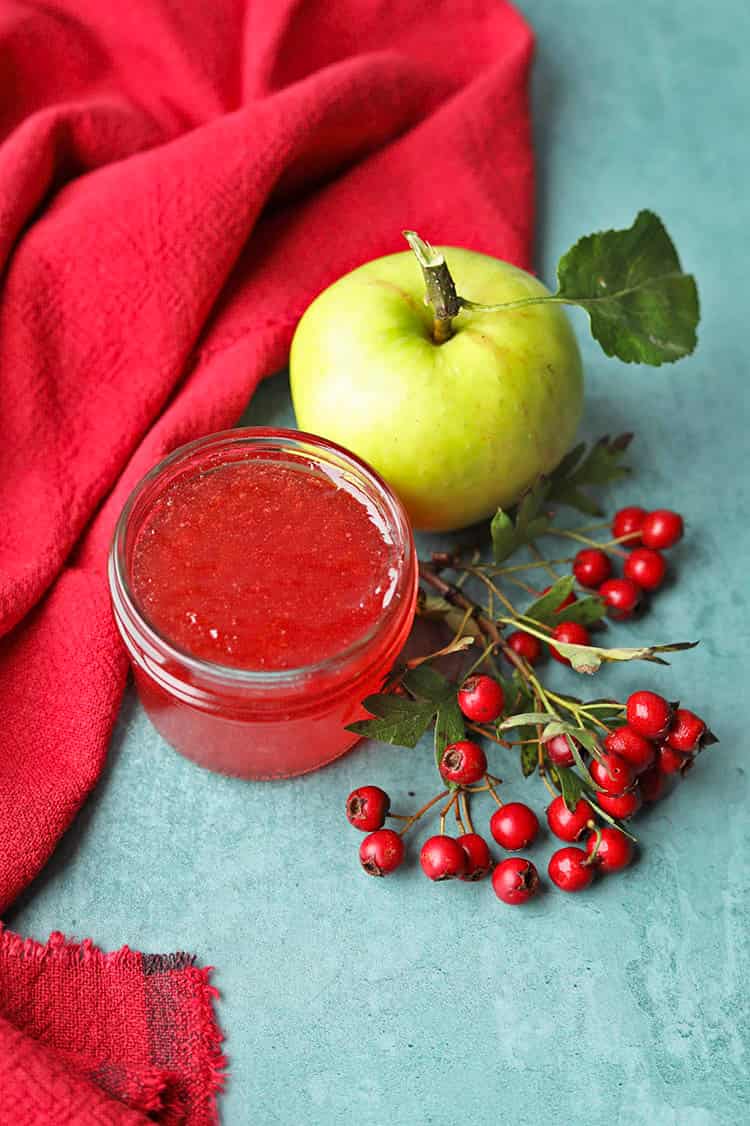
Haw jelly is a delicious traditional preserve made from the fruit of the hawthorn tree which is found in hedgerows across the UK. Haw jelly has a beautiful ruby colour and a subtle sweet and tangy flavour which works well with rich roast meat and game and also as part of a cheeseboard.
Why should I make Haw Jelly?
Have you ever walked past a hawthorn bush or hedge that is covered with bright red berries and wondered if they are edible and what you could make?
Although haws have a bitter taste when eaten raw, you can use them to make haw jelly. It is a wonderful way to enjoy and preserve the unique flavour of hawthorn berries, which are otherwise rarely used in cooking. It allows you to capture the essence of autumn and make the most of a foraged ingredient, turning simple berries into a delicious, versatile jelly.
What is the difference between jelly and jam?
Jam and jelly are both preserves made with fruit and sugar. In the UK jam is a preserve with whole pieces of fruit in it like this recipe for Rhubarb and Strawberry Jam. Jelly is made with strained juice with no pulp or pieces of fruit.
What does Haw Jelly taste like?
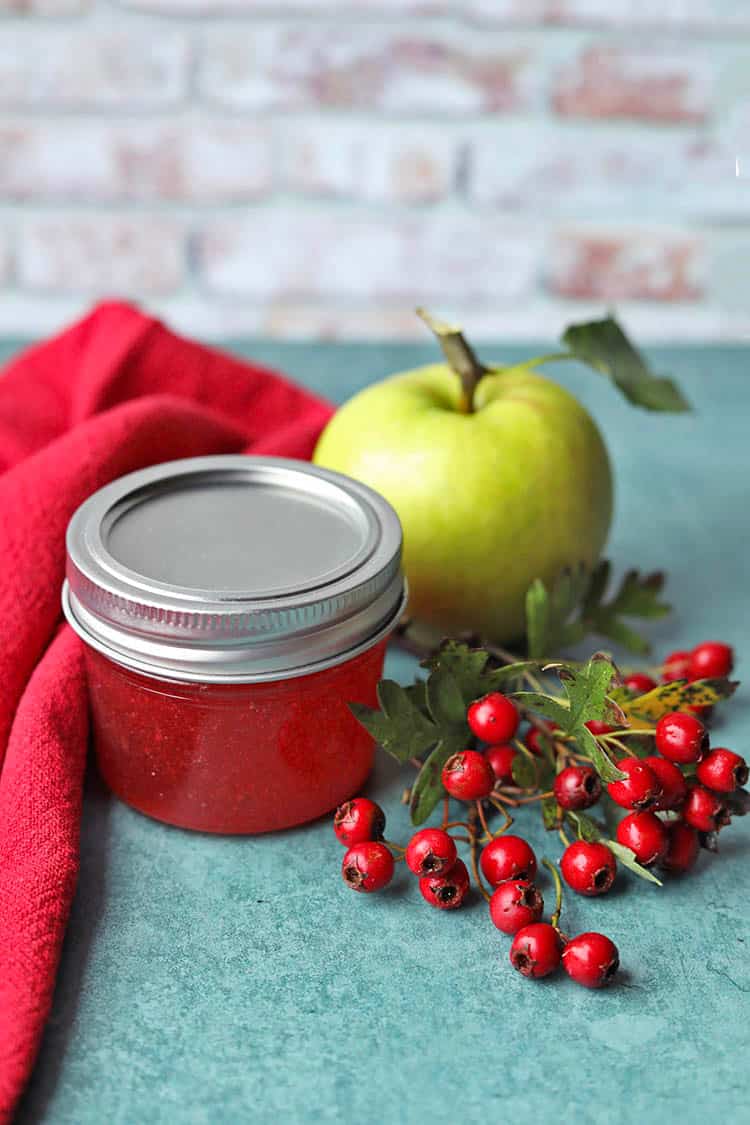
It’s difficult to describe flavours and haw jelly combines the tartness of the fresh haws with the sweetness of the apples and the sugar that preserves it. The nearest I can think of is redcurrant or cranberry jelly, both of which can be served as sweet preserves or with savoury dishes. It doesn’t have the same intensity as Sloe Gin Jelly but there are similar notes to sloe preserves.
What ingredients do I need to make Haw Jelly (Hawthorn)?
You only need four ingredients and some water, here is what you need:
- Haws
- Apples
- Sugar
- Lemon juice
- Water
A full list of the ingredients and the required quantities is found in the recipe card at the end of this article.
What are haws?
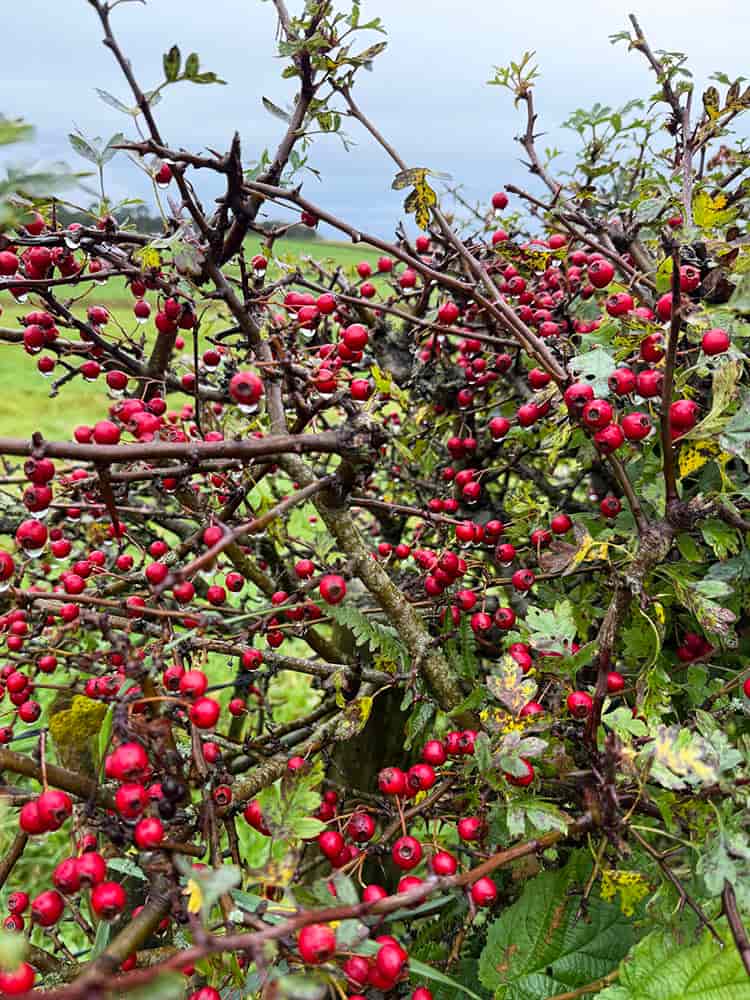
Haws are the small, red berries produced by the hawthorn tree, which is commonly found in hedgerows throughout the British Isles. The hawthorn has shiny leaves and produces a froth of creamy white sweet-smelling flowers in Spring. The red berries ripen in late autumn and have a slightly tart flavour, making them ideal for use in preserves such as haw jelly.
Where do I find haws?
Hawthorn grows in woodland, parks and scrub land. You are most likely to find haws in hedgerows as it is a very robust plant which grows quickly and has sharp thorns which deter animals from breaching the hedge!
Tips for foraging for haws
- Do not trespass on private property, always ask if you see haws in an area that looks private.
- Always leave some haws for wildlife, they are enjoyed by both birds and small mammals.
- Don’t pick haws close to a busy road as the berries will be covered in pollution from exhaust fumes.
- Wear one heavy duty gardening glove, the thorns are sharp and you may need to hold back some branches to reach the haws.
- Pick only haws that are fully crimson red and shiny.
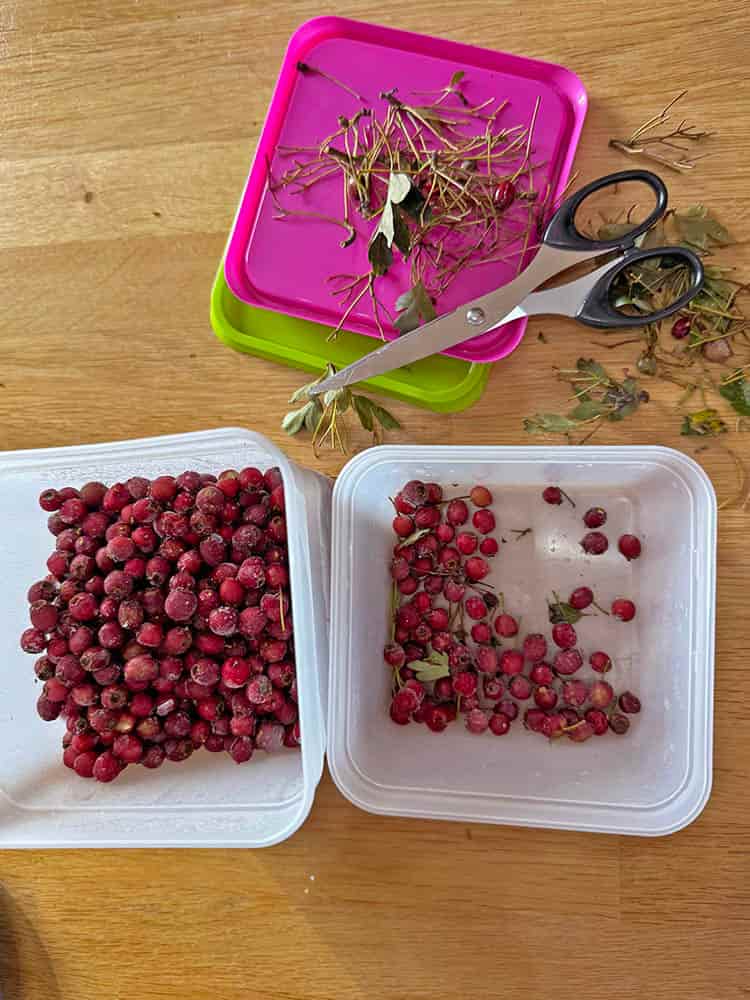
- Use secateurs or heavy duty scissors to snip the clusters of haws from the bush. You can pick the whole bunch and remove them from the stems when you get home.
- Once you get your haws home, put them onto a tray or baking sheet in a single layer, and remove the stems, any soft or unripe berries and random leaves.
- Wash the haws and dry on a tea towel or kitchen paper.
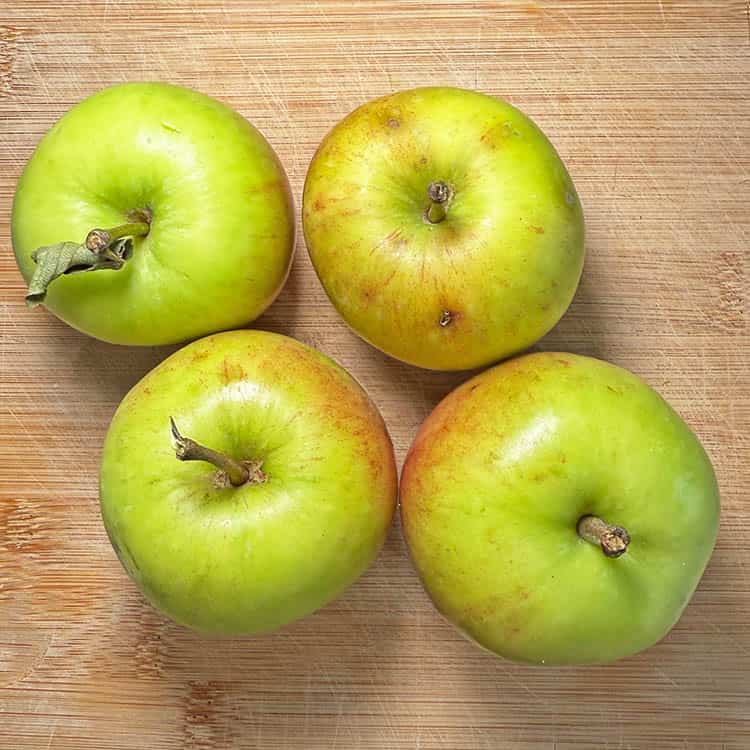
What kind of apples should I use in the Haw Jelly?
I use the apples from my apple tree which are cooking apples. If you are buying apples then it’s best to use sour cooking apples like Bramley Seedlings or Granny Smiths.
What kind of sugar should I use?
I use ordinary granulated sugar from the supermarket. If you plan to enter your jelly in a show, you can buy preserving sugar which has larger crystals that dissolve more slowly and create less froth on top of the jam. However, be careful when buying preserving sugar that you don’t buy Jam Sugar which is different and has added pectin and gelling agents.
How do I calculate how much sugar to add to the strained juice?
When you make jelly the amount of liquid that you get from the pulp can depend on the haws and apples that you use. So it’s not possible to give an exact quantity of sugar.
Once the juice has drained through the jelly bag, measure how much you have. Then you will need 160 g ( 3/4 cup) of sugar for every 200 ml (1/2 pt) of juice.
Do I need to add pectin to Haw Jelly?
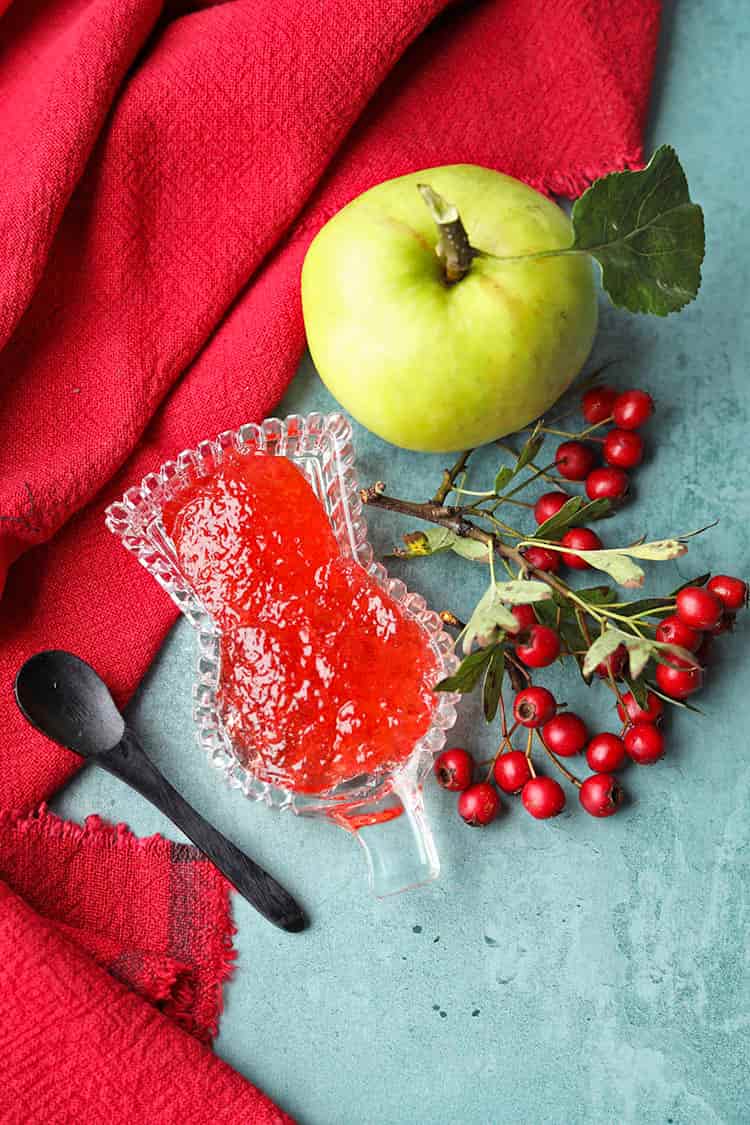
Pectin is the ingredient that makes jam set or gel. All fruit has some pectin, but some fruits are high in pectin and others have hardly any. Both haws and apples are high in pectin so you should get a good set.
However, I do add lemon juice to the recipe because it adds a little sharpness and helps the pectin strands to come together and set the jelly. Lemon juice is highly acidic and also helps to reduce the growth of bacteria.
How should I store Haw Jelly?
Store the sealed sterilised jam jars in a cool larder or cupboard. A lot depends on where you live in the world and how warm or humid your climate is. However, once the jelly is opened I tend to keep it in the fridge unless it is going to be used quickly.
How much jelly does this recipe make?
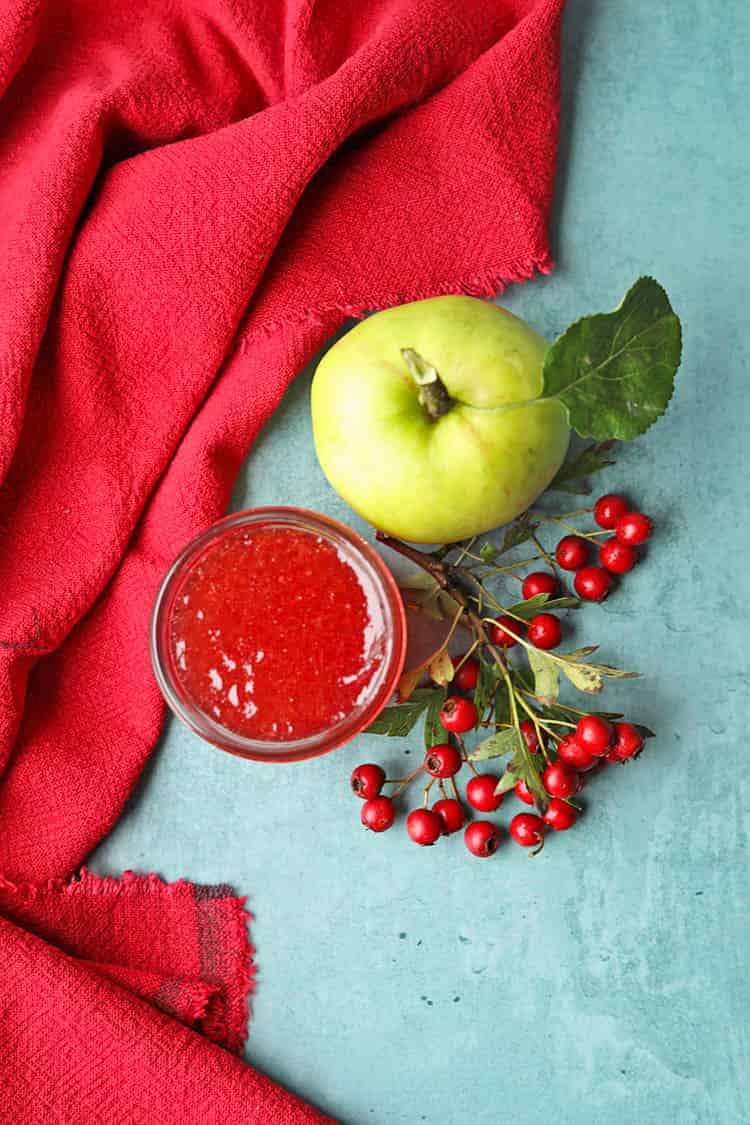
This small batch recipe makes 1 standard 380 ml (1lb) jar or two to three small jars depending on size. You can double or treble the recipe if you want to make more.
How long can I keep Haw Jelly?
You can keep sealed jars of Haw Jelly for about a year without any deterioration in quality. You can keep the jelly longer than that and it will still be edible but you may lose some colour and sometimes it shrinks inside the jar.
Do I need to water bath the jelly?
No, as long as the jars are sterilised and sealed while the jelly is hot, you don’t need to water bath this jelly. However, if you usually water bath and feel more comfortable doing so, then follow your usual procedures.
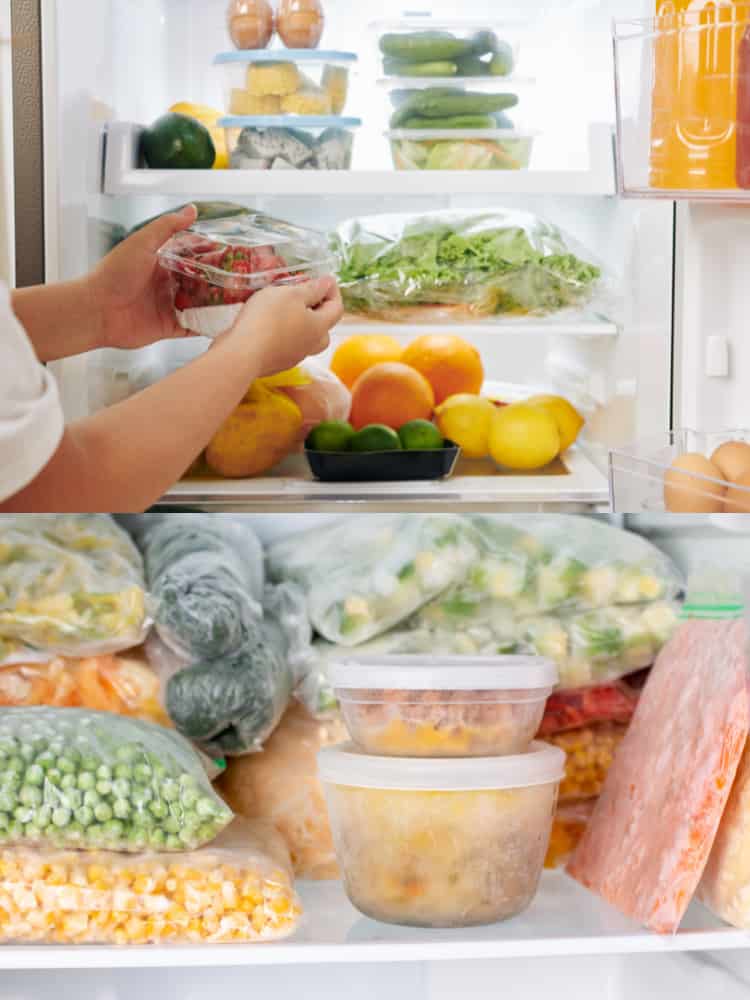
Can I freeze the haws?
Yes, haws freeze really well. Once you have cleaned and dried them, lay them out on a tray in a single layer and freeze. Once frozen store them in freezer bags or lidded freezer boxes. They will keep for around 3 months without any deterioration.
Can I freeze the strained juice?
If you don’t have time to make the Haw Jelly right away then you can store the juice in a sealed container in the fridge for up to 3 days. If you need to store it for longer then by all means freeze it in freezerproof containers. Defrost the juice in a pan over a low heat before adding the lemon juice and sugar.
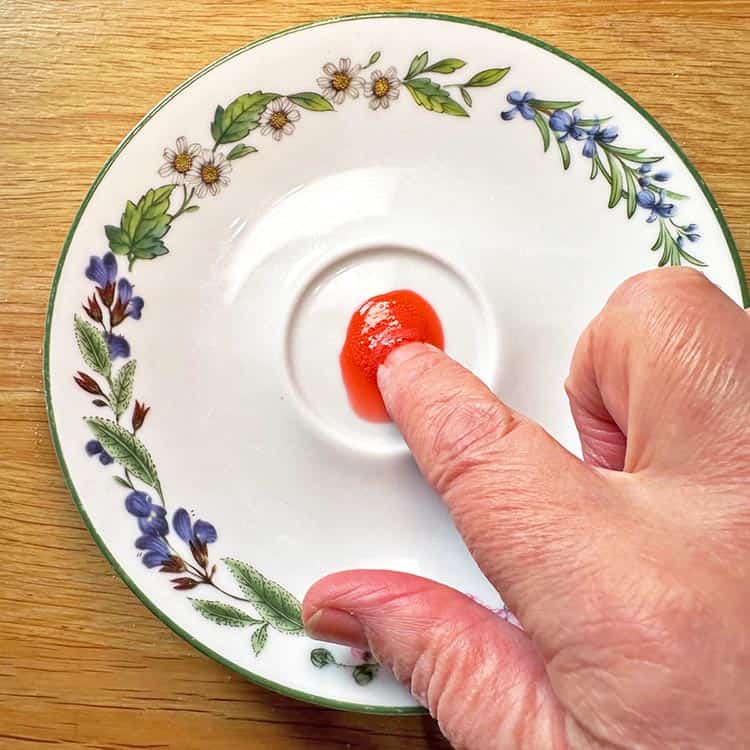
How do I know when the jelly is ready?
I use the wrinkle test to check if the jelly is ready.
- Before you start to make the jelly place 2 saucers or small plates in the fridge.
• After the jelly has been at a rolling boil for 10 minutes, take it off the heat.
• Put a teaspoon of the jelly onto one of the saucers from the fridge.
• Return it to the fridge for 5 minutes.
• Take the saucer out of the fridge and push your finger across the jelly. If it is ready the jelly should wrinkle where you pushed your finger (see photo above).
• If it is not ready, bring the jelly back to a boil for 5 minutes then repeat the saucer test. Be careful not to burn the jelly on the base of the pan.
• Skim off any froth on top of the jelly in the pan with a metal spoon, then pour or ladle your jelly into sterilised jars and seal.
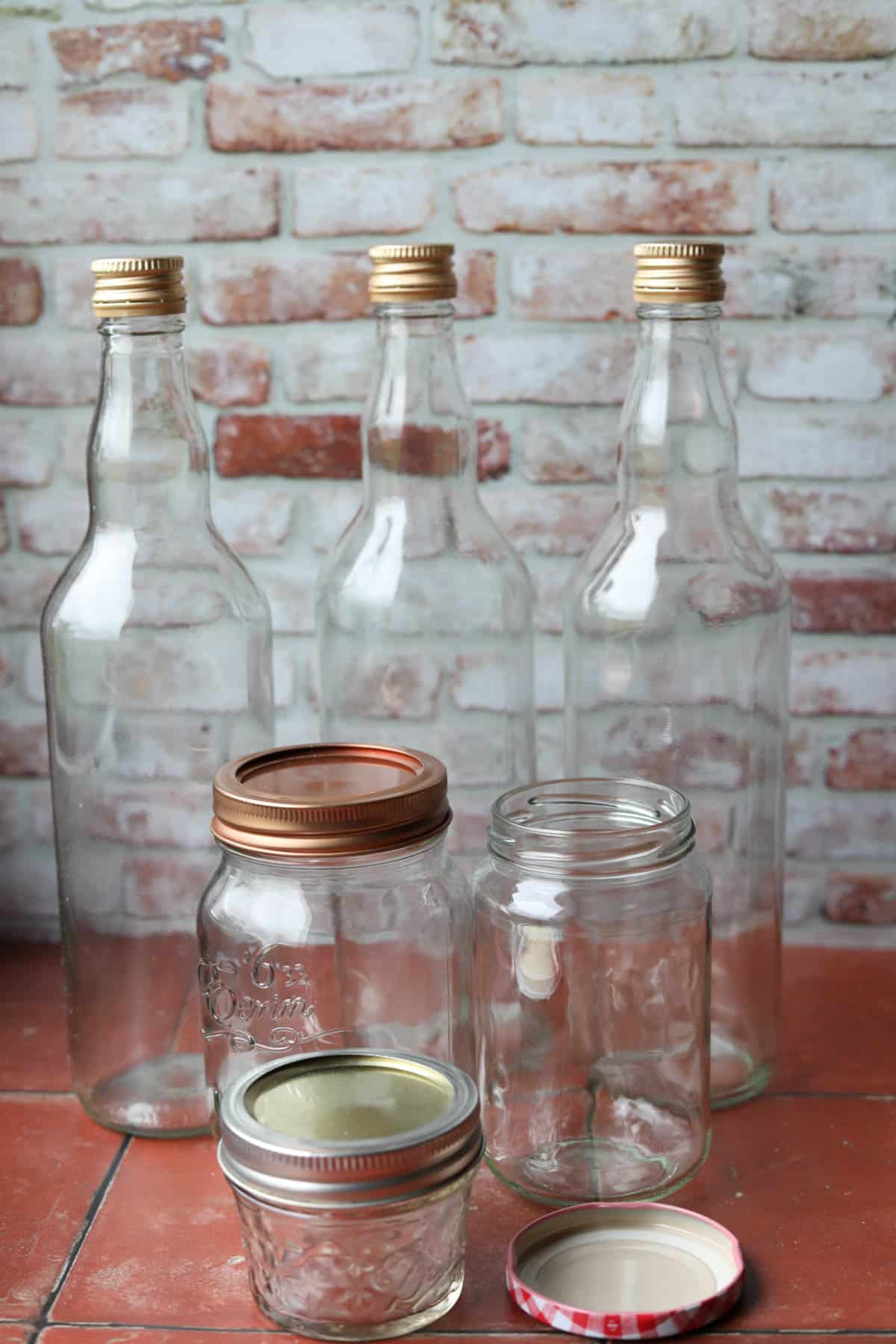
How do I sterilise the glass jars?
Find out why you should sterilise your glass jars and about the different methods you can use to sterilise bottles and jars in this article.
Vegetarian
Haw Jelly is suitable for a vegetarian or vegan diet as it contains no animal products.
Gluten Free
This jelly contains no ingredients that have gluten therefore it is suitable for people following a GF diet.
For more information regarding any dietary information provided on this website, please refer to my Nutritional Disclaimer.
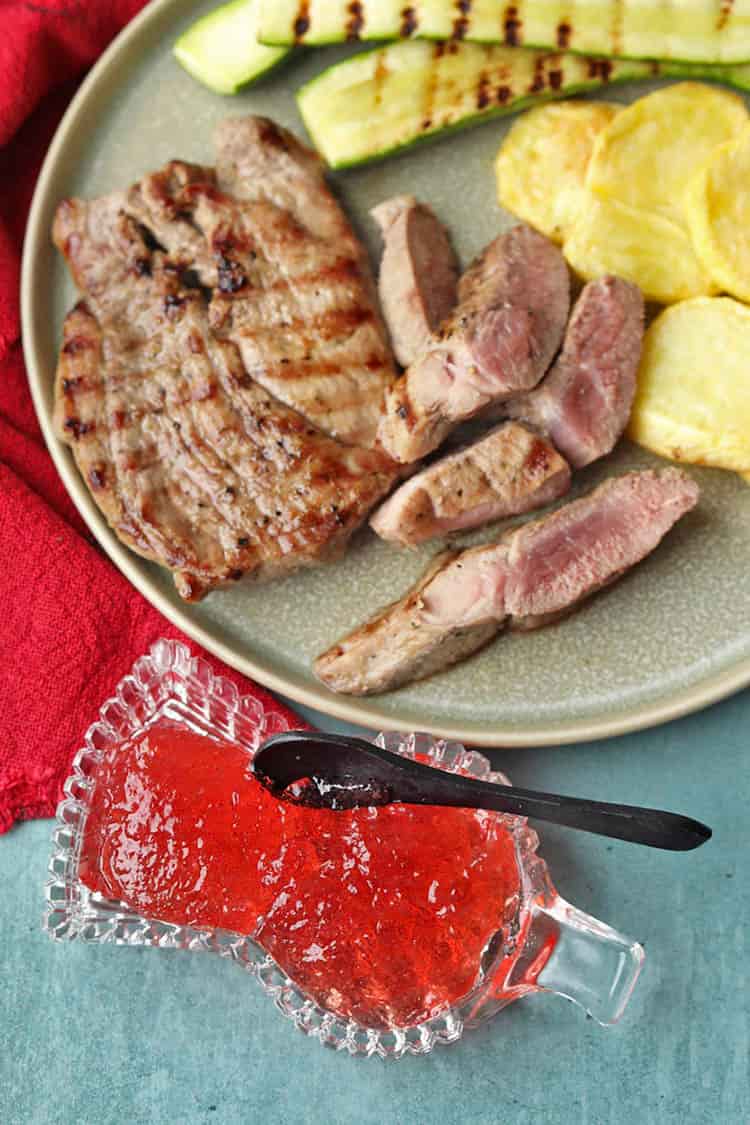
How should I serve Haw Jelly (Hawthorn)?
You can bring a touch of the countryside to your table serving this versatile jelly with both sweet and savoury dishes:
- It pairs beautifully with roast meats such as lamb or pork adding a touch of sweetness. It’s fresh, tangy taste is perfect to serve alongside game dishes, such as venison or pheasant, and birds such as duck or goose where it helps to cut through rich flavours.
- Haw Jelly makes a great addition to a cheeseboard, it works well with strong or mature cheeses like Cheddar or Stilton and also with creamy soft cheeses like Brie and Camembert.
- You can also serve Haw Jelly as a sweet preserve, it’s delicious spread on freshly baked bread, scones, and crumpets for breakfast or afternoon tea.
Give Haw Jelly as a gift
Homemade preserves are a lovely gift and Haw Jelly is not something that is readily available to buy. The time you put into making the jelly will be appreciated as well as receiving the delicious preserve.

HAW JELLY (HAWTHORN)
Equipment
- Sharp knife
- chopping board
- weighing scales
- measuring jug
- Large saucepan
- wooden spoon
- jelly bag or muslin
- Lemon squeezer
- 2 saucers or small plates
- ladle
- jam funnel (optional)
- glass jam jars with lids
Ingredients
- 450 grams (1 lb) haws weighed without stems
- 450 grams (1 lb) apples peeled weight
- 600 millilitres (2½ cups) water
- 1 lemon juice only
- 450 grams (1 lb) white granulated sugar approximately
Instructions
- Clean the haws and remove the fruit from the stems, then weigh out 450 grams (1lb).
- Place the haws into a large saucepan and add 300 millilitres (¾ pint) water.
- Simmer the haws in the water until they are soft, about 20 minutes. Then use a potato mashed to roughly break up the haws.
- Peel and core the apples, chop into pieces about 3-4 cm square (1 inch) then weigh out 450 grams (1lb).
- Add the apples to the haws with another 300 millilitres (¾ pint) of water and simmer for 10- 15 minutes until the apples collapse.
- Put the mixture into a jelly bag over a bowl or jug and leave for at least 6 hours or overnight.
- Put two saucers or small flat plates into the fridge (for wrinkle test).
- Measure the juice. You will need 160 g ( 3/4 cup) of sugar for every 200 ml (1/2 pt) of juice. Put the strained juice into a large saucepan and heat until warm then add the sugar.
- Add the juice of one lemon and continue to heat until the sugar has dissolved.
- Bring to a boil and boil for 10 minutes.
- Remove the pan from the heat and place a teaspoonful of the jelly onto one of the cold saucers. Return the saucer to the fridge for 5 minutes, then push your finger across the jelly. If a wrinkle forms then the jelly is ready to pot. If no wrinkle appears then return the jelly to the heat and boil for a further 5 minutes then retest.
- Skim any froth from the top of the jelly and use a ladle or jug to fill it into sterilised glass jars.
- Seal the jelly with a clean lid or a combination of waxed paper and cellophane.
- Serve Haw Jelly with roast meat and game, such as lamb, beef and venison. It also goes well with pheasant, goose and duck and is a good addition to a cheeseboard.
I love a jelly recipe, particularly when it goes well with savoury foods. I’d never heard of haw jelly but a delighted I came across your recipe. I made a batch and I love the flavour, I’ll definitely make this again as it’s perfect with cheese.
Good to hear that you enjoyed the jelly. I love these old country recipes.