
Sloe Gin Jelly
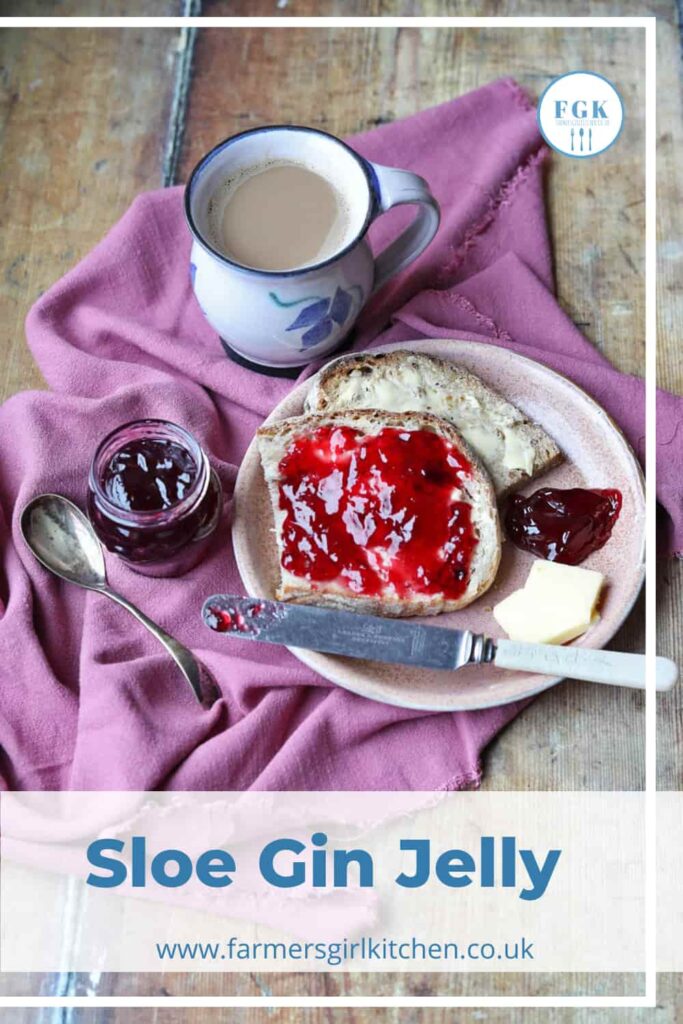
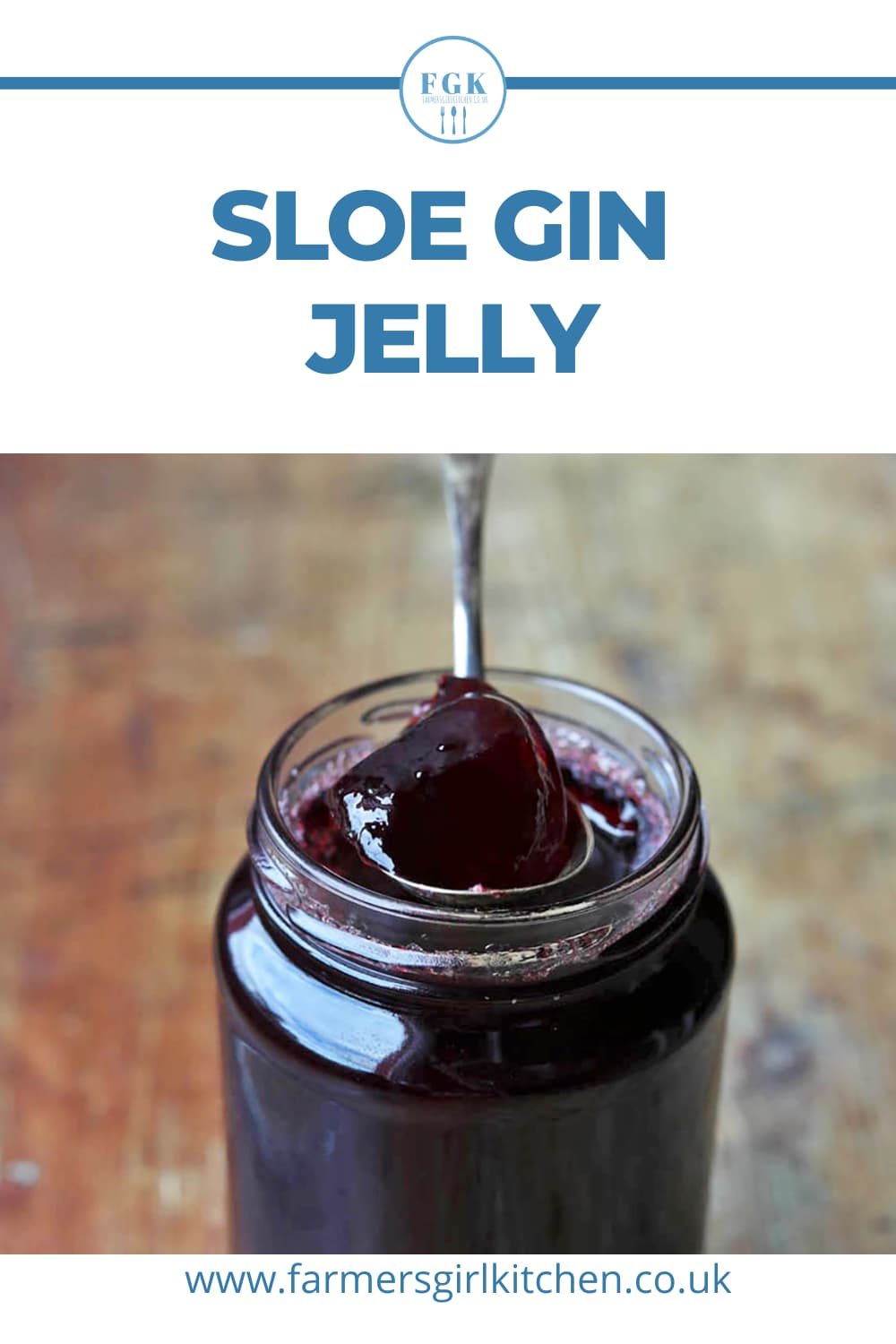
Sloe Gin Jelly is a rich and fruity preserve that gives you all the flavour of traditional sloe gin to spread on your toast! This simple jelly is a great way to use foraged sloes (blackthorn fruit) and makes an ideal gift.
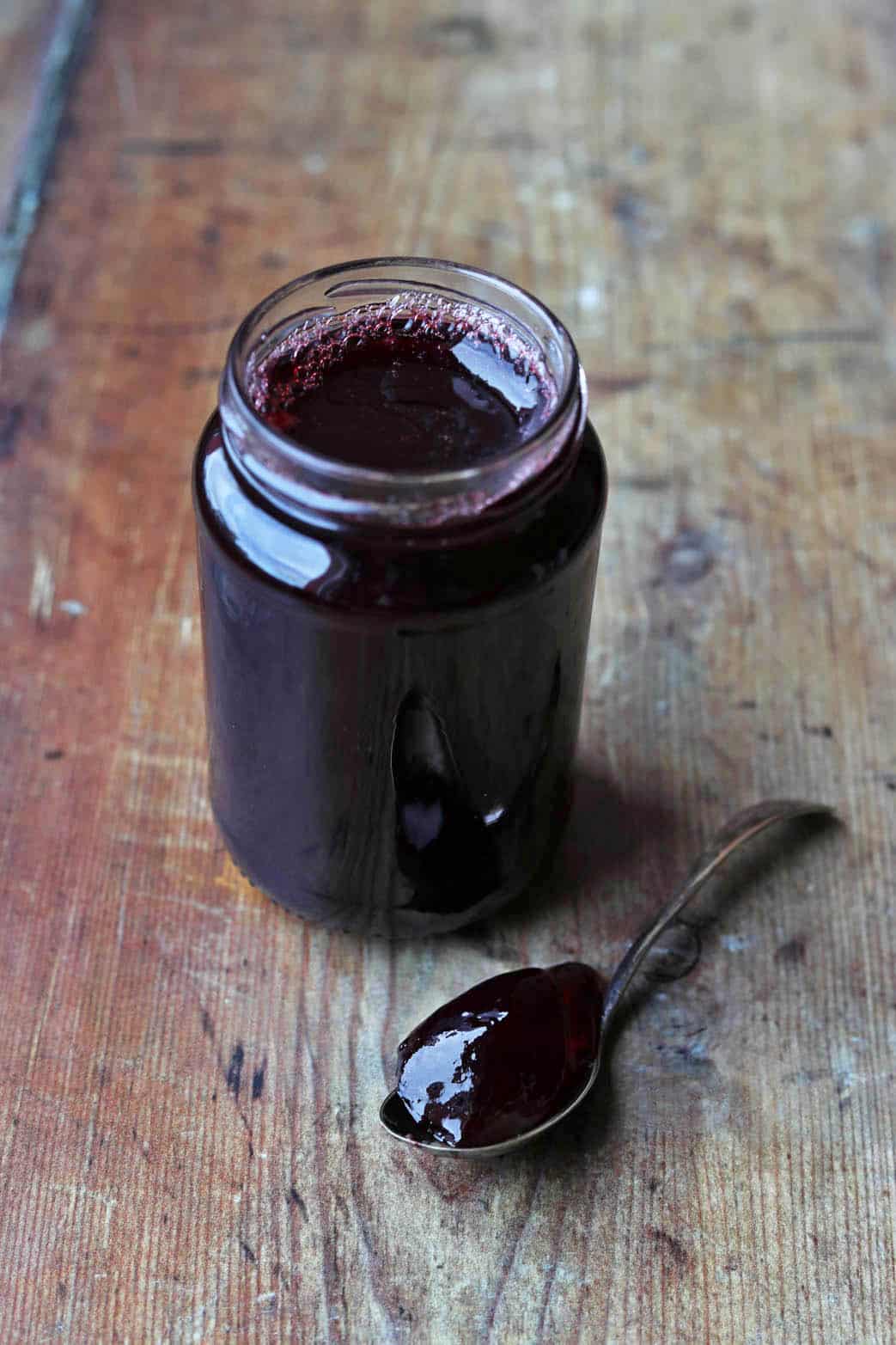
Why should I make Sloe Gin Jelly?
If you are looking for something a little bit different to do with foraged sloes, then this jelly is perfect. It’s a simple recipe and results in an outstanding flavoured jelly. Use it for everyday or save it for the holidays. Pot it up in small, pretty glass jars and give it as a gift.
What is Sloe Gin?
Sloe gin is a liqueur made with sloes, gin and sugar. The sloes are pricked with a needle and then left to soak in the gin and sugar. It is turned regularly for three months when it is ready to decant into bottles. Sloe gin takes on a rich reddish-purple colour from the sloes and is often served at Christmas.
What is the difference between jelly and jam?
Jam and jelly are both preserves made with fruit and sugar. In the UK jam is a preserve with whole pieces of fruit in it like this recipe for Rhubarb and Strawberry Jam. Jelly is made with strained juice with no pulp or pieces of fruit.
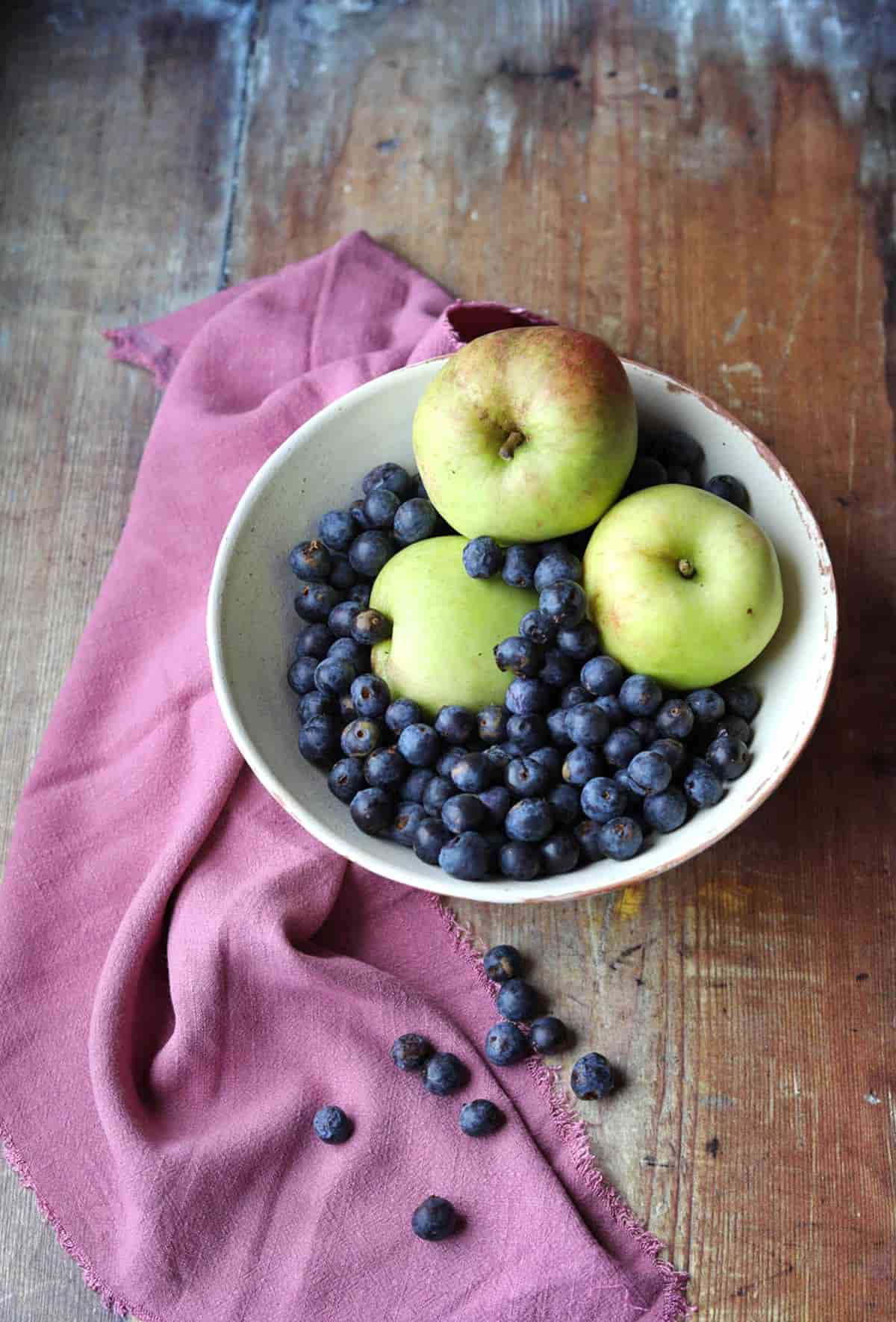
What do I need to make Sloe Gin Jelly?
This is a simple recipe that focuses on the fruit flavours. You will need:
- Sloes
- Apples
- Sugar
- Water
- Lemon Juice
- Gin
A full list of the ingredients and the required quantities is found in the recipe card at the end of this article.
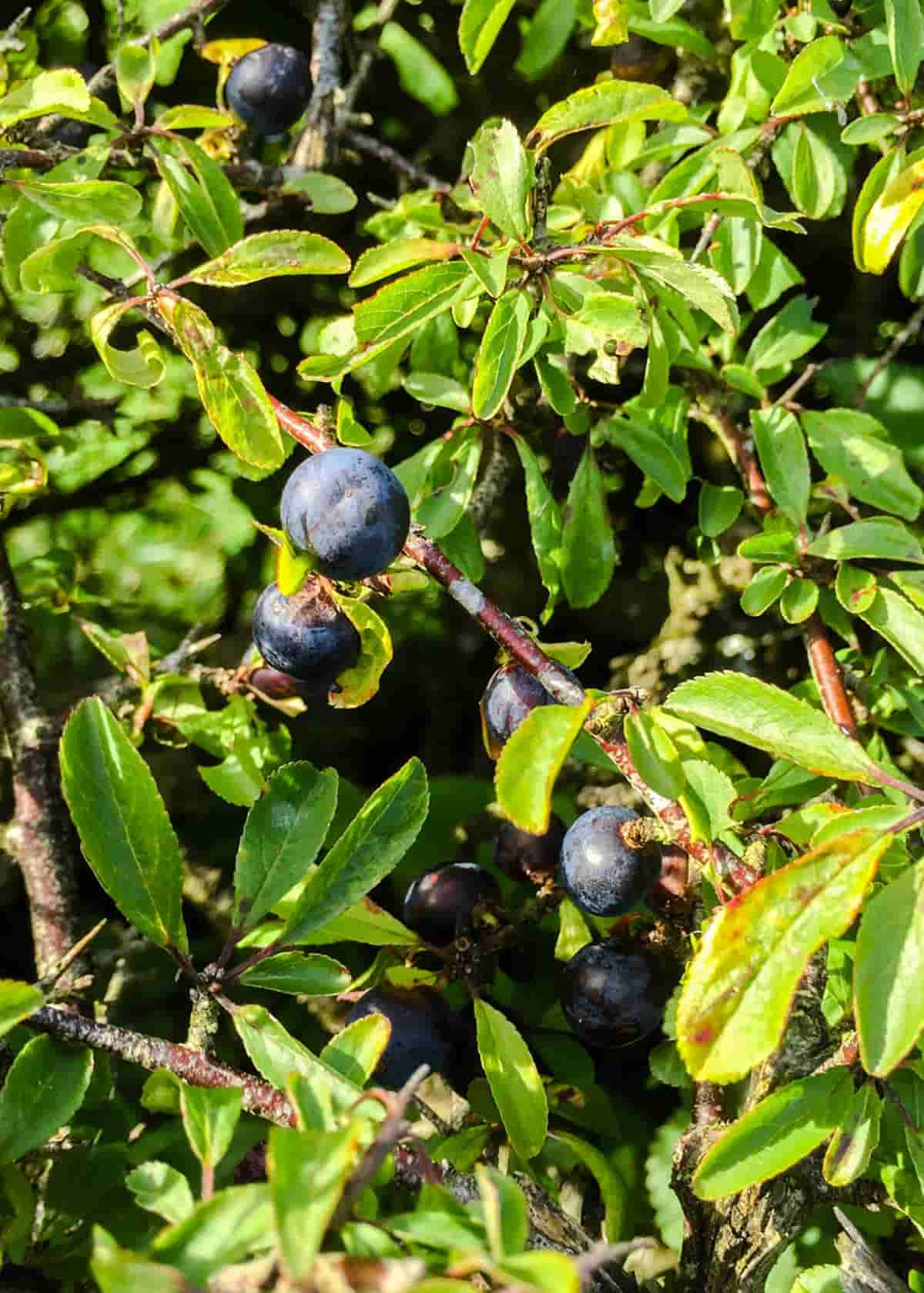
What are Sloes?
Sloes are the fruit of the blackthorn (Prunus spinosa), a relative of the plum. The blackthorn is a small thorny native tree that has white flowers in spring followed by oval back fruits.
Blackthorn has fierce spines and was a popular hedging plant but most hedges in Scotland are now hawthorn. I have one stretch of old blackthorn hedge on our farm which provides me with sloes each year.
If you are out picking sloes, then also look out for the red berries of the hawthorn. These can be made into delicious Haw Jelly.
When do I pick sloes?
Sloes are usually ripe from the middle to the end of September. The sloes should be firm, not soft and dark purple in colour with a white bloom Sloes become sweeter and the skins softer after the first frost. If you can’t wait, then create your own frost by freezing the whole sloes. It’s a great way to store them and you can use them straight from frozen or let them defrost, depending on what you are making.
Can I use the sloes that I used to make my Sloe Gin?
I do not recommend using sloes from sloe gin to make this jelly. The flavour from the sloes has already been infused into the gin and there may not be enough flavour for the jelly.
Can I use frozen sloes to make Sloe Gin Jelly?
Yes, you can use fresh sloes, frozen sloes or a combination of both. To freeze sloes wash the sloes and remove any twigs or leaves. Then dry them on a clean tea towel, open freeze the sloes on a baking pan in your freezer. Once frozen store them in a sealed container or freezer bag.
I’ve used sloes that have been in the freezer for a year and have had no issues with them at all.
What kind of apples should I use?
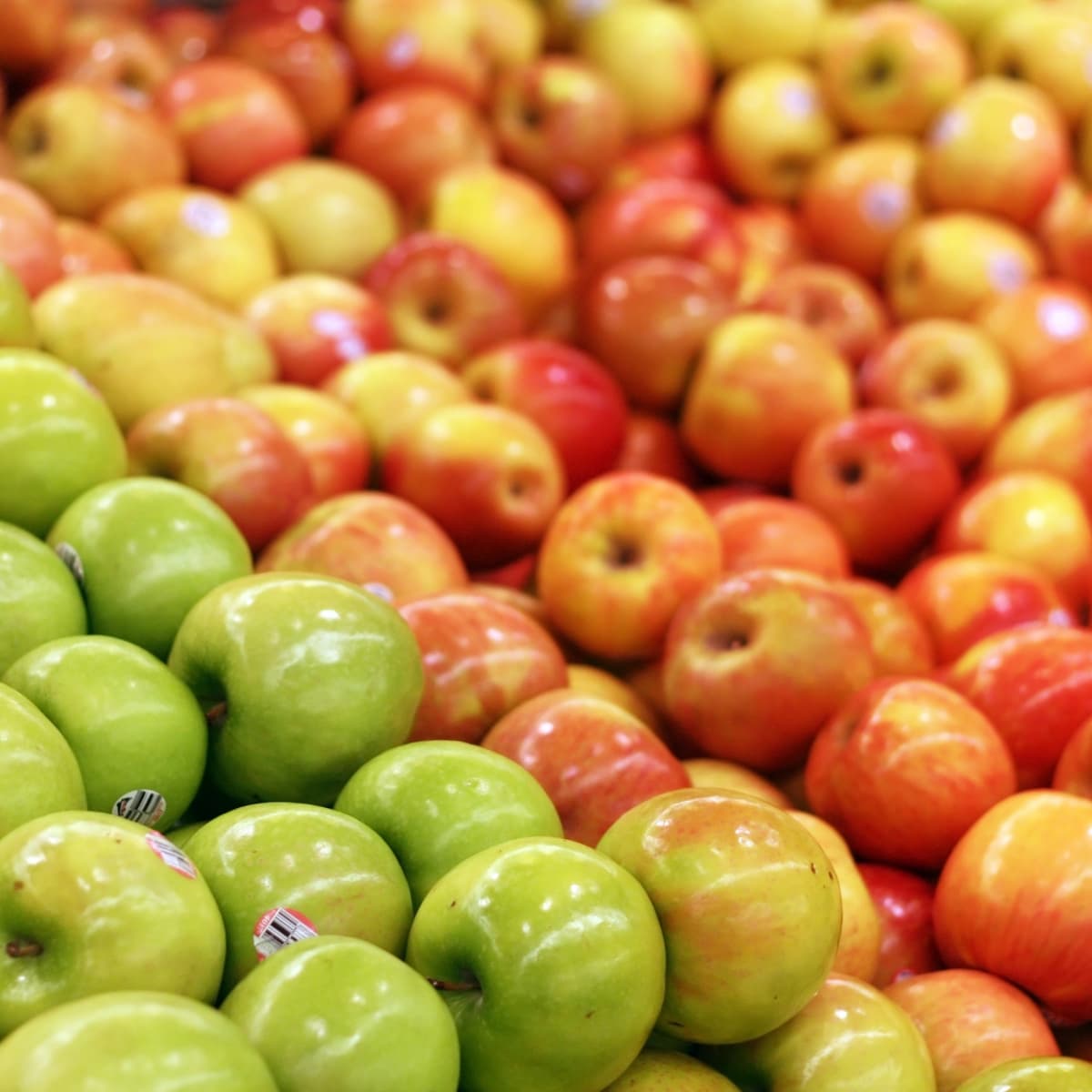
I use the apples from my apple tree which are cooking apples. If you are buying apples then it’s best to use sour cooking apples like Bramley Seedlings or Granny Smiths.
What kind of sugar should I use?
I use ordinary granulated sugar from the supermarket. If you plan to enter your jelly in a show, you can buy preserving sugar which has larger crystals that dissolve more slowly and create less froth on top of the jam. However, be careful when buying preserving sugar that you don’t buy Jam Sugar which is different and has added pectin and gelling agents.
Can I leave out the gin?
Yes, you certainly can leave out the gin and make a Sloe Jelly with no alcohol. The alcohol in this jelly should boiled off in the rolling boil stage but if you want to be extra sure or plan to serve the jelly to children then it is best to leave it out.
How do I calculate how much sugar to add to the strained fruit juice?
When you make jelly the amount of liquid that you get from the pulp can depend on the sloes and apples that you use. So it’s not possible to give an exact quantity of sugar.
Once the juice has drained through the jelly bag, measure how much you have. Then you will need 160 g ( 3/4 cup) of sugar for every 200 ml (1/2 pt) of juice.
Do I need pectin in Sloe Gin Jelly?
Pectin is the ingredient that makes jam set or gel. All fruit has some pectin, but some fruits are high in pectin and others have hardly any. Both sloes and apples are high in pectin so you should get a good set.
However, I do add lemon juice to the recipe because it adds a little sharpness and helps the pectin strands to come together and set the jelly. Lemon juice is highly acidic and also helps to reduce the growth of bacteria.
How should I store Sloe Gin Jelly?
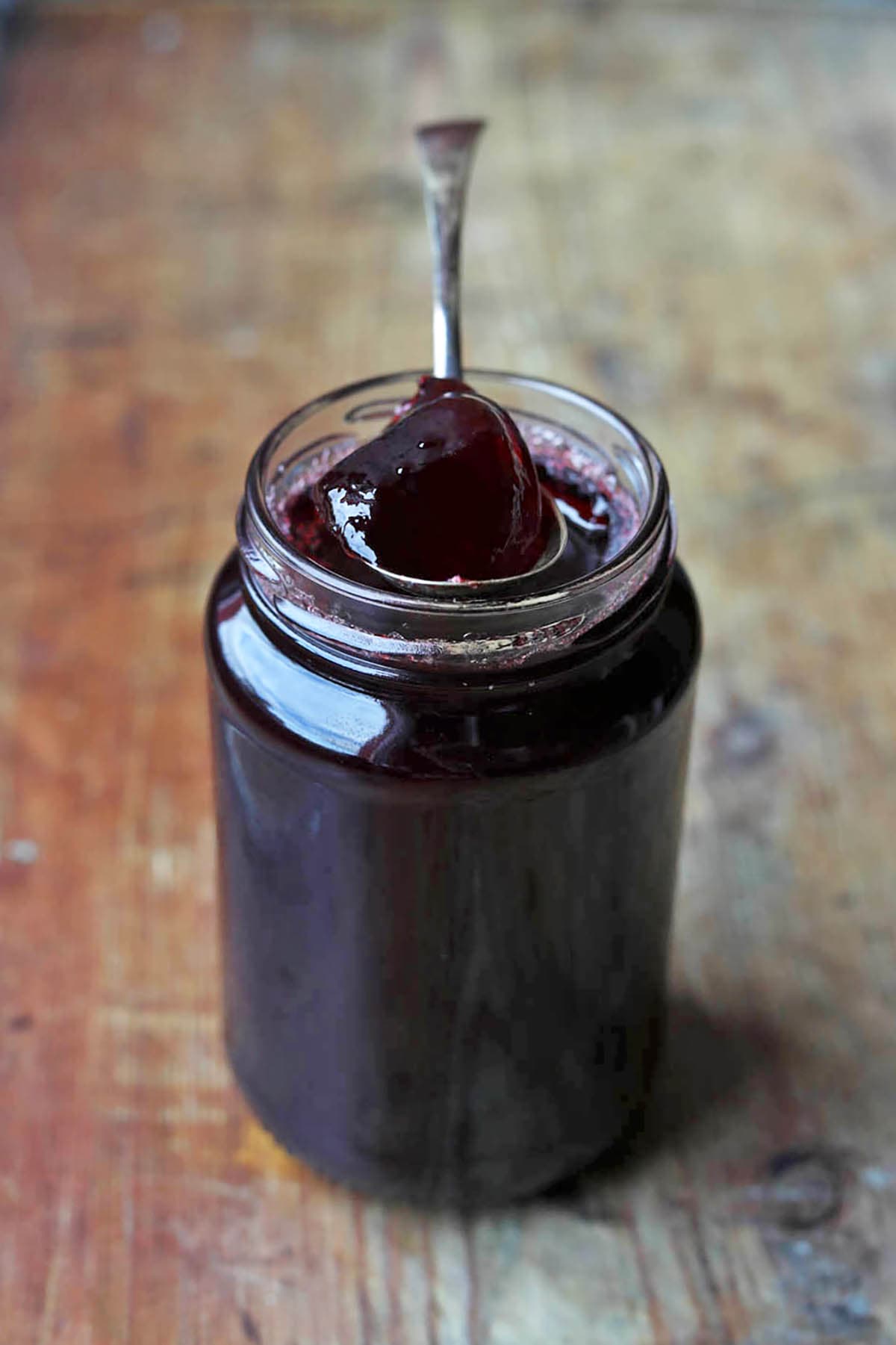
Store the sealed sterilised jam jars in a cool larder or cupboard. A lot depends on where you live in the world and how warm or humid your climate is. However, once the jam is opened I tend to keep it in the fridge unless it is going to be used quickly.
How long can I keep Sloe Gin Jelly?
You can keep sealed jars of Sloe Gin Jelly for up to 9 months without any deterioration in quality. You can keep the jelly longer than that and it will still be edible but you may lose some colour and sometimes it shrinks inside the jar.
Do I need to water bath the jelly?
No, as long as the jars are sterilised and sealed while the jelly is hot, you don’t need to water bath this jelly. However, if you usually water bath and feel more comfortable doing so, then follow your usual procedures.
Can I freeze the strained sloe and apple juice?
If you don’t have time to make the Sloe Gin Jelly right away then you can store the juice in a sealed container in the fridge for up to 3 days. If you need to store it for longer then by all means freeze it in freezerproof containers. Defrost the juice in a pan over a low heat before adding the lemon juice, gin and sugar.
How do I sterilise glass jam jars?
There are many different ways to sterilise glass jam jars including putting them in a hot wash in the dishwasher. This is how I sterilise my jars:
- Wash and rinse the glass jars and metal lids
- Put the wet glass jars on a baking tray upside down.
- Place in the oven at 150C before you start to make the jelly. The water creates steam which helps to sterilise the jars.
- Pour boiling water from the kettle over the lids then drain and leave to dry on kitchen paper.
- Take the jars out of the oven and fill them with the hot jelly, then put on the lids.
- When the jars have cooled check that the lids are tight and tighten further if needed.
You can also sterilise your jars on a hot wash in your dishwasher or use your Air Fryer to sterilise a small batch of jars.
How do I know when the jelly is ready?
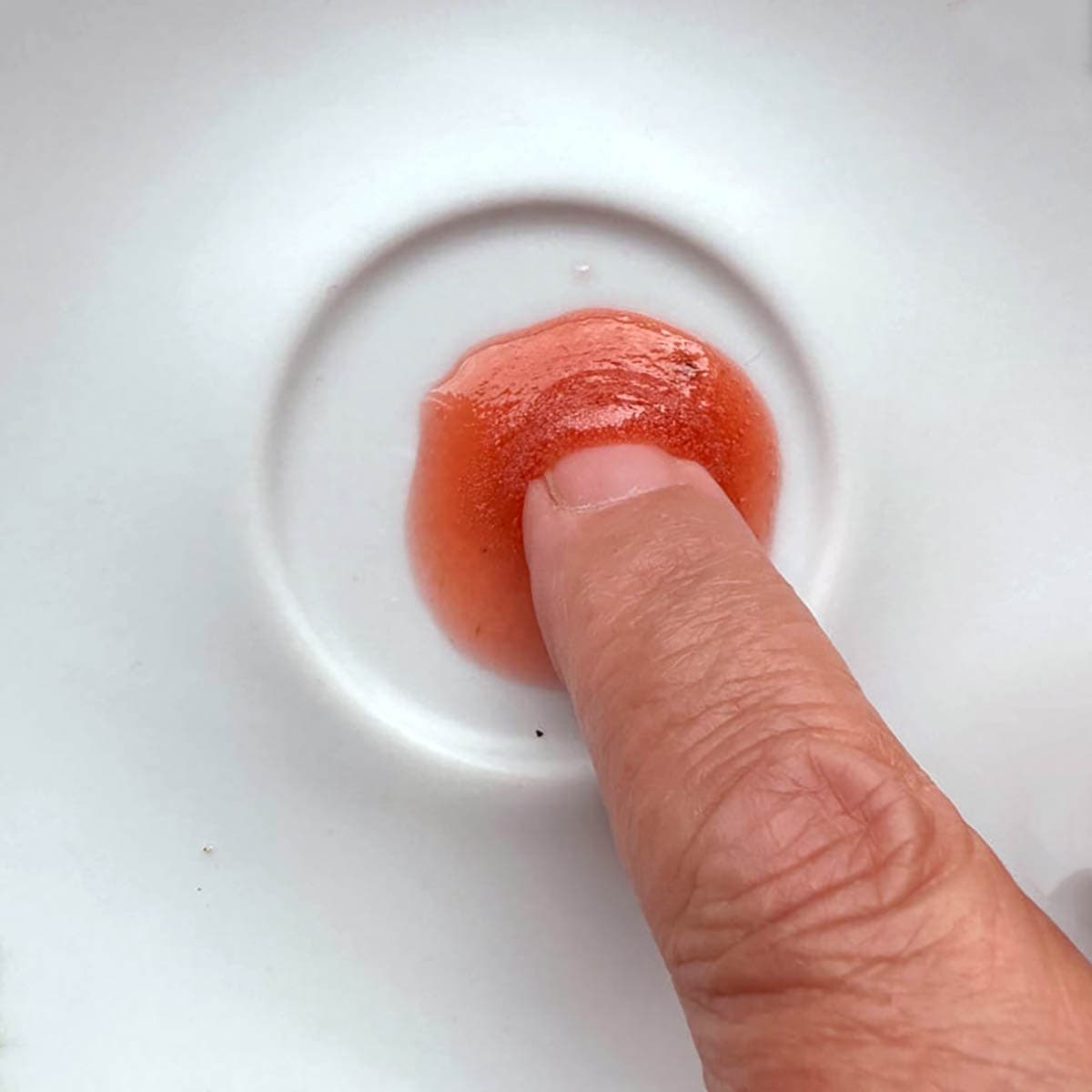
I use the wrinkle test to check if the jelly is ready.
• Before you start to make the jelly place 2 saucers or small plates in the fridge.
• After the jelly has been at a rolling boil for 15 minutes, take it off the heat.
• Put a teaspoon of the jelly onto one of the saucers from the fridge.
• Return it to the fridge for 5 minutes.
• Take the saucer out of the fridge and push your finger across the jelly. If it is ready the jelly should wrinkle where you pushed your finger (see photo above).
• If it is not ready, bring the jelly back to a boil for 5 minutes then repeat the saucer test. Be careful not to burn the jelly on the base of the pan.
• Skim off any froth on top of the jelly in the pan with a metal spoon, then pour or ladle your jelly into sterilised jars and seal.
Vegetarian
Sloe Gin Jelly is suitable for a vegetarian or vegan diet as it contains no animal products.
Gluten Free
This jelly contains no ingredients that have gluten therefore it is suitable for people following a GF diet.
For more information regarding any dietary information provided on this website, please refer to my Nutritional Disclaimer.
How should I serve Sloe Gin Jelly?
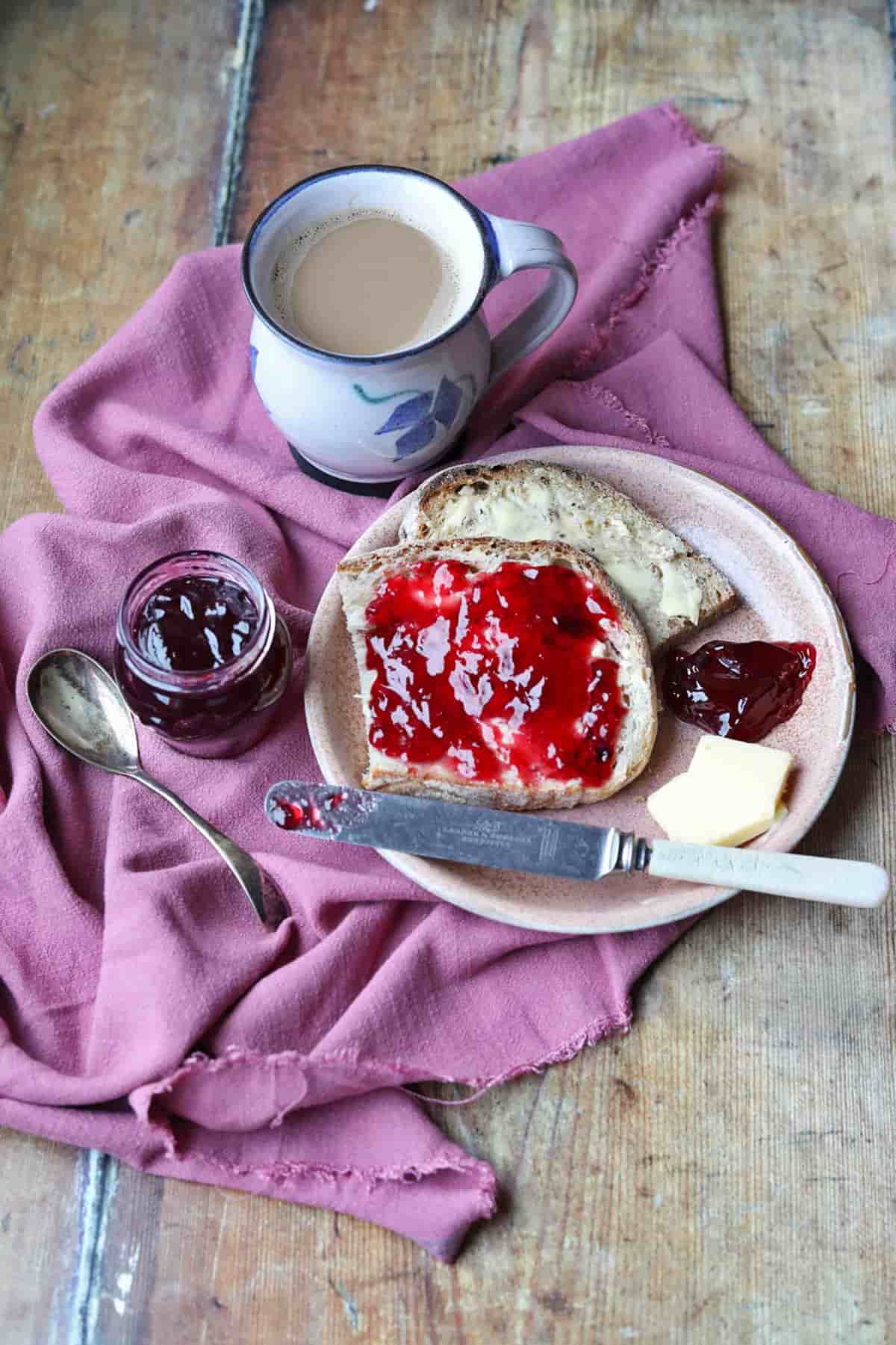
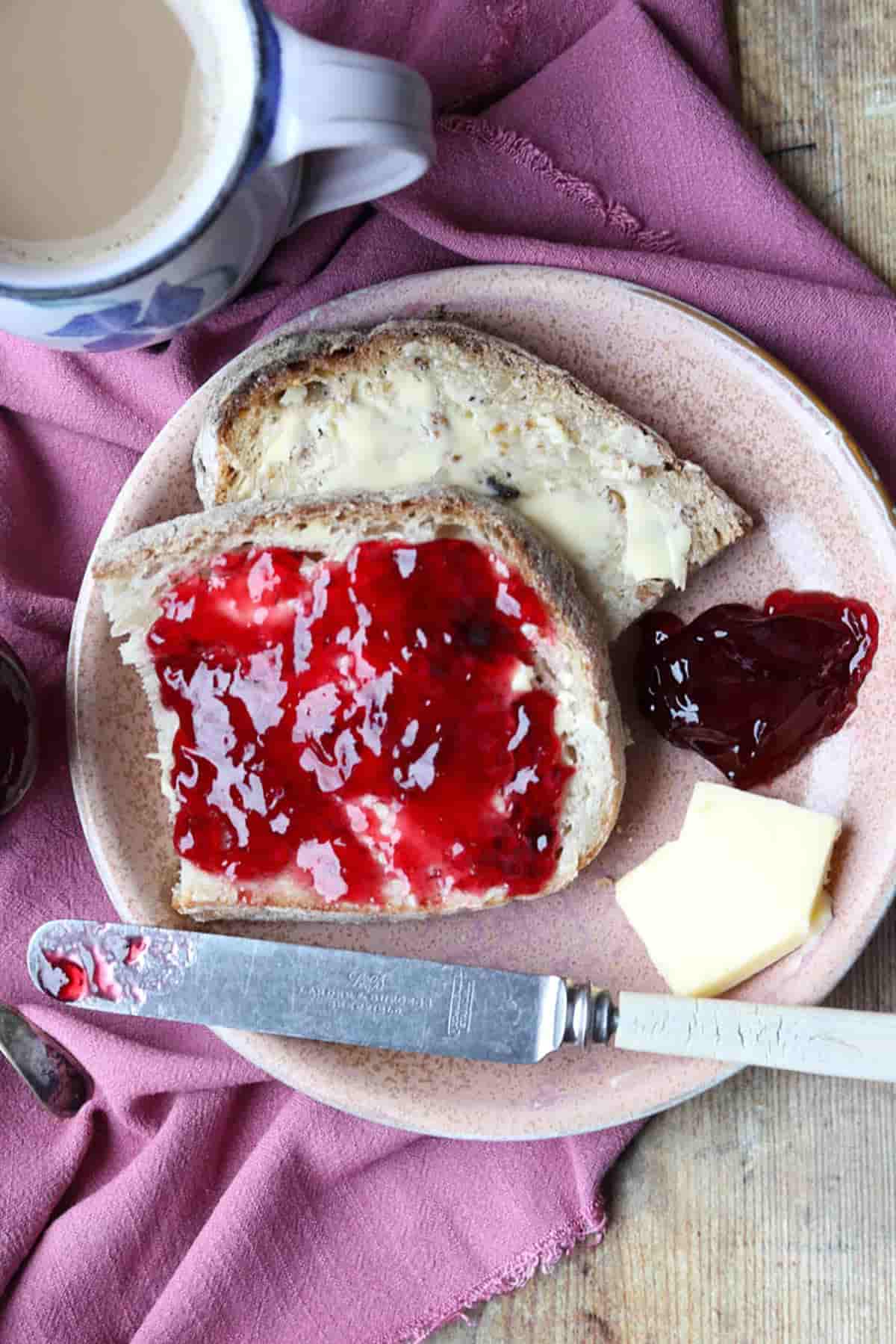
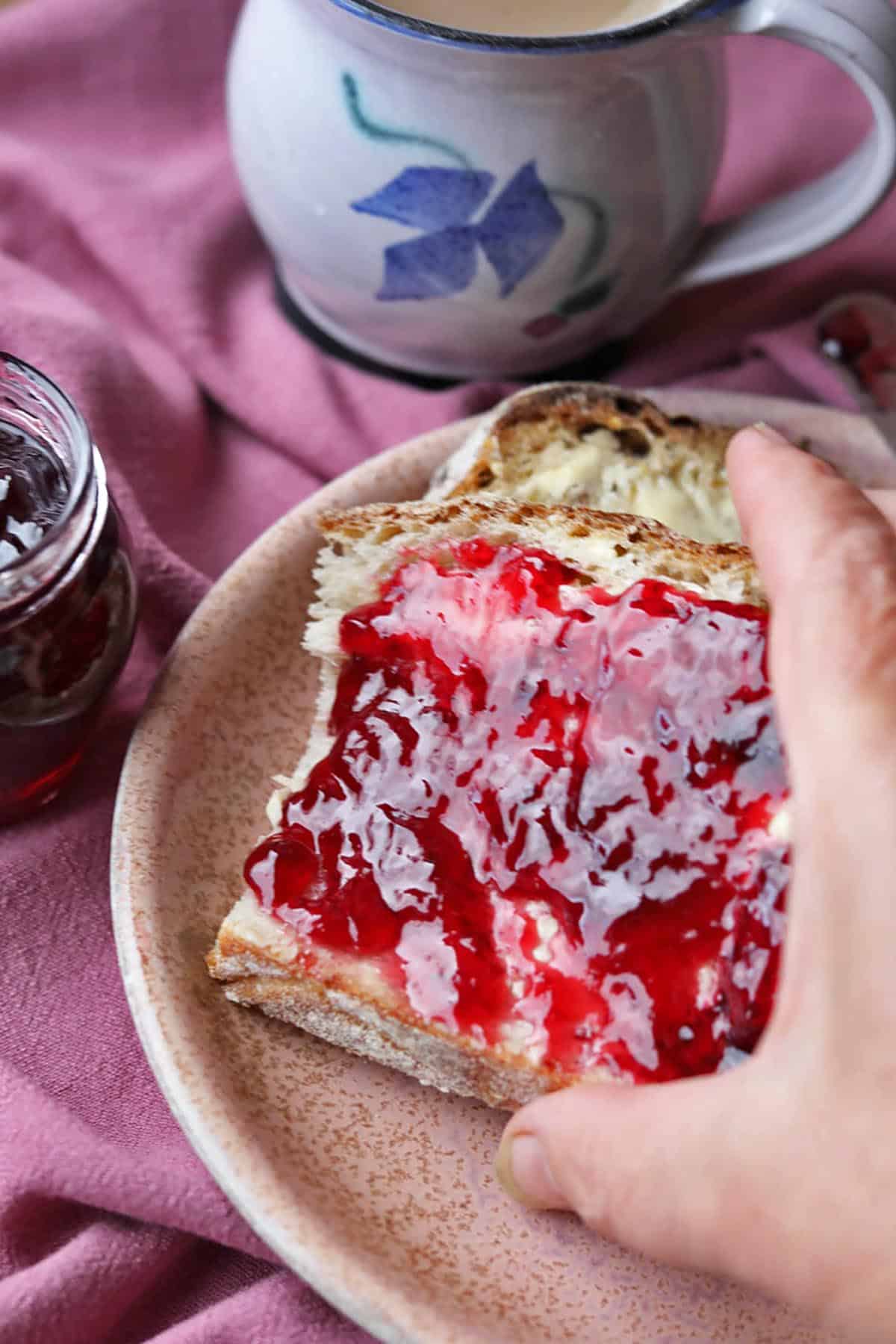
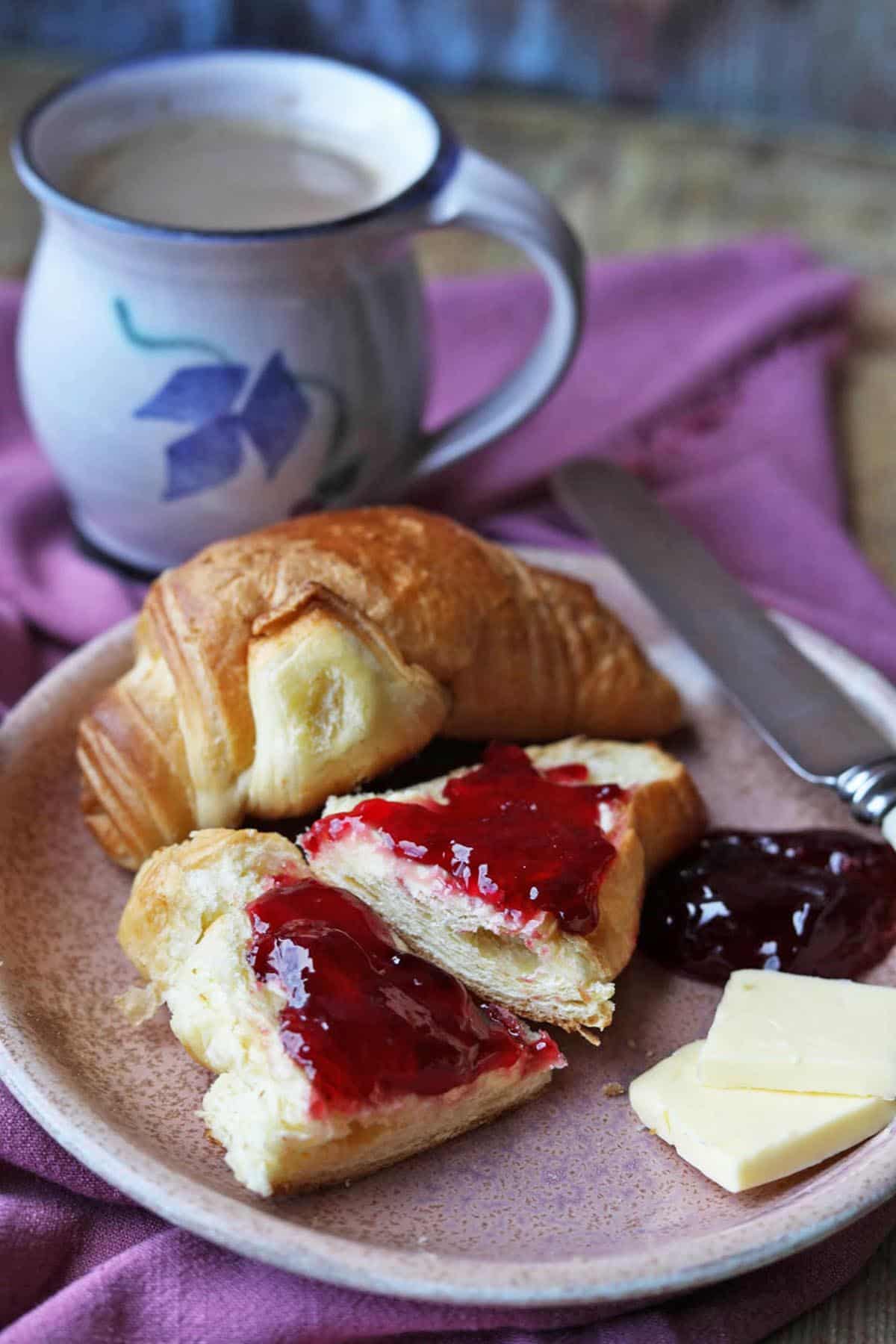
Sloe Gin Jelly is a really versatile jelly. You can serve it as I have as a sweet preserve at breakfast on bread, toast or croissants. You can also serve it with scones for afternoon tea or a snack.
It’s also a great accompaniment to roast chicken or turkey, lamb and game such as pheasant or venison. Add a spoonful to your gravy or serve it alongside your roast. We love this jelly served with a rich pate on melba toast or oatcakes.
More Sloe Recipes

All my jams, jellies chutneys and pickle recipes
PIN FOR LATER
Sloe Gin Jelly Recipe
Equipment
- 1 Sharp knife
- 1 chopping board
- 1 weighing scales
- 1 Large saucepan
- 1 wooden spoon
- 1 jelly bag or muslin
- 1 colander
- 1 Large bowl
- 1 measuring jug
- 1 jam funnel optional
- 1 ladle
- 3 glass jam jars with lids
Ingredients
- 800 g (4¼ cups) sloes
- 400 g (3½ cups) apples
- 1 litre (2¼ pt) water
- 2 tbsp lemon juice
- 700 g (3½ cups) sugar Approximately. Use 160 g (¾ cup) sugar per 200 ml (½ pint) of juice
- 50 ml (¼ cups) gin (optional)
Instructions
- Wash and drain the 800 g (4¼ cups) sloes and put into a large pan. Add 400g (3½ cups) apples and chop into quarters then into eights. No need to remove the peel or the pips. Add them to the pan with the 1 litre (2 ¼ pints) water.
- Bring the fruit and water to a boil and then simmer until the apples are soft. About 20 minutes.
- Spoon the fruit into a jelly bag or muslin over a colander set over a large bowl.
- Thread string through the loops on the jelly bag or around your muslin and hang from a suitable place so the juice can drip into the bowl. I use the handle of a cupboard in my utility room. Leave the juice to drip through for at least 4 hours or overnight.
- Measure the juice in a measuring jug.
- Pour the juice into a large pan and add sugar. Add 160 g (¾ cup) of sugar for every 200 ml (½ pint) of juice. Gently heat the juice and sugar until all the sugar is dissolved.
- Add the 2 tbsp lemon juice and the 50 ml (¼ cup) gin, if using. Bring to a boil, then keep on a rolling boil for 15 minutes before taking off the heat.
- Place a spoonful onto a cold saucer (from the fridge) and wait 5 minutes before pushing your finger across the jam to see if it will form a wrinkle.If there is no wrinkle then boil the jelly for a further 5 minutes and retest.
- Once the jelly reaches setting point, skim off the froth and use a ladle to pour the hot jelly into sterilised jam jars and seal with lids.
- Serve Sloe Gin Jelly on bread, croissants, scones or crumpets. It's also delicious served with roast meats such as chicken, turkey, lamb, pheasant and venison.
This is a delicious jam recipe and I love the combination of sloes and apple with the gin.
Thanks, Lesley. It’s a real winner with us.
Fab idea, don’t tell my family but they’re all getting this for Christmas!
Ha Ha! I’ll keep it a secret.
The perfect recipe to utilise my foraged sloes! Really tasty, thanks.
That’s great to hear, Sally.
I love sloe gin – and I suspect this would be like a naughty but very nice version of my grandma’s damson jelly. Now I just need to wait for the sloe season to come around again!
Thanks Fiona, it’s a great way to use sloes and yes, it would be similar to damson jelly although I think the sloes have a flavour all of their own.