
WW2 British Ration Book Recipes
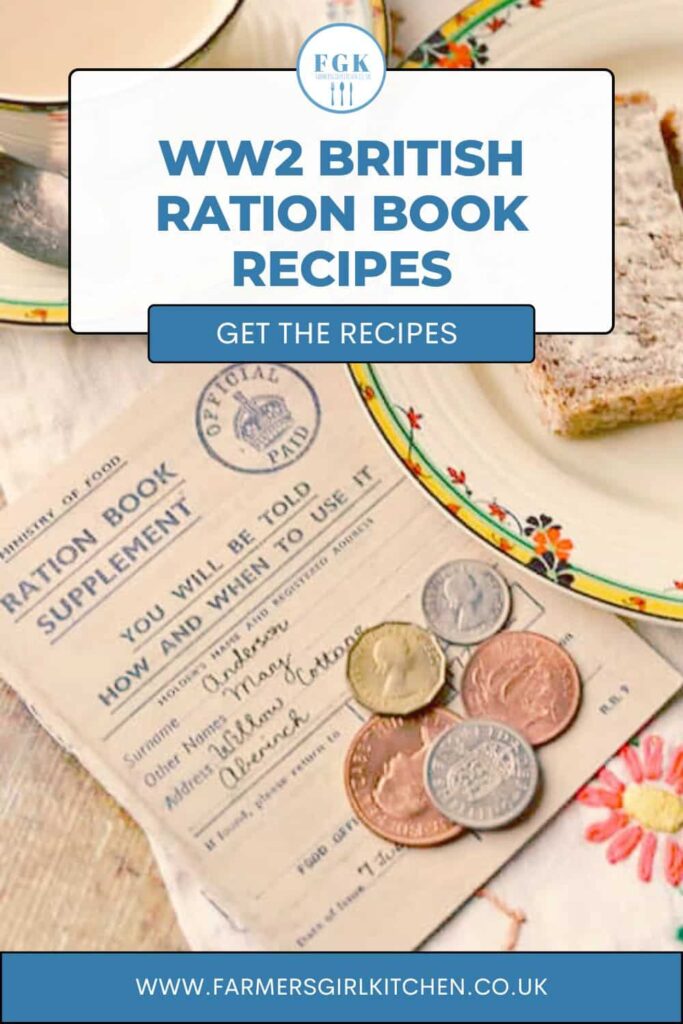
This is more than simply a collection of WW2 British Ration Book Recipes. Find out why rationing was introduced and how it changed as the war progressed. And enjoy recreating the recipes eaten by the those on the Home Front feeding their families on very limited resources.
Why should I make British Ration Book Recipes?
There are lots of good reasons to make WW2 British Ration Recipes. Here are some I think are worth considering:
- Ration recipes are good value with minimum waste.
- Reduced fat, sugar and meat and increased vegetables meant that many people had better nutrition than they had before the war.
- I’ve tested the recipes that I am sharing and they are all delicious.
- But mostly it’s fun to try the recipes that tested the ingenuity of your grandparents and great-grandparents.
Why was food rationed in WW2?
Although food rationing is associated with WW2 there had been a little experience of rationing towards the end of WW1. Rationing was introduced in 1918 after the lack of control over food supplies caused frustration and unrest when shoppers who had queued for hours found that supplies had run out.
As an island nation Britain imports a lot of different foods and it was no different in the 1930s. The government recognised that shipping was likely to be targeted and food could be in short supply. This time they were much better prepared.
How was rationing managed in Britain?
Rationing started with registration in November 1939. The first items to be rationed were butter and bacon and even though there was no shortage of sugar at this time, registration was used to help with distribution.
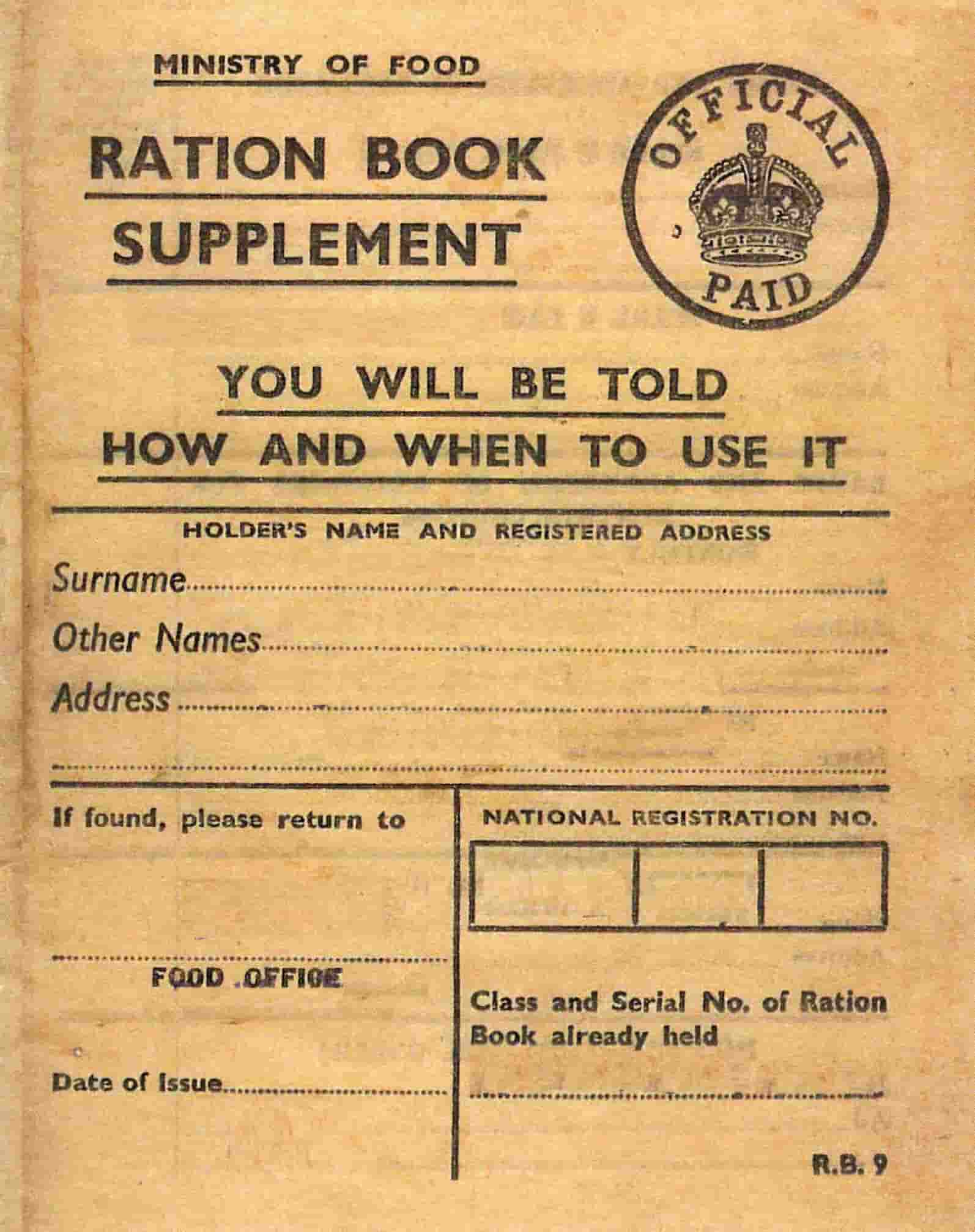
Rationing got serious when ration books with weekly allowances were issued in January 1940. Every family had to register with a specific grocer, butcher and any other shopkeepers.
Coupons were designed to be cut out of the ration book but this was far too time consuming. So by the end of 1940 this was dropped in favour of the shopkeeper using a pen to put a stroke through a weeks coupons to cancel them, a much simpler solution.
The Lease-Lend Agreement
In 1941 the British Government and the United States of America signed the Lease-Lend agreement. This resulted in consignments of cheese, lard and canned food being shipped from USA to Britain in order to supplement home grown supplies.
To make sure these were distributed fairly the government introduced ‘points rationing’ in addition to the established ration allowances. A number of items, such as tinned goods, dried fruit, cereals and biscuits, were rationed using this points system. The number of points allocated changed according to availability and consumer demand.
These points were more flexible and could be spent on any number of the lease lend agreement foods and were not tied down to a the shop where the shopper was registered.
The system changed gain in 1942 when another form of points rationing was introduced. These were called ‘personal points’ and they could be used for chocolate and sweets if they were available, which wasn’t very often!
The Black Market
The lack of quantity and variety of food made buying on the ‘black market’ very tempting. However, selling or buying unregulated goods was illegal and carried heavy fines and up to two years imprisonment.
Dig for Victory
The Dig for Victory slogan was first seen in a London evening paper in 1940 but the push to convert land for growing food had started before that in 1939.
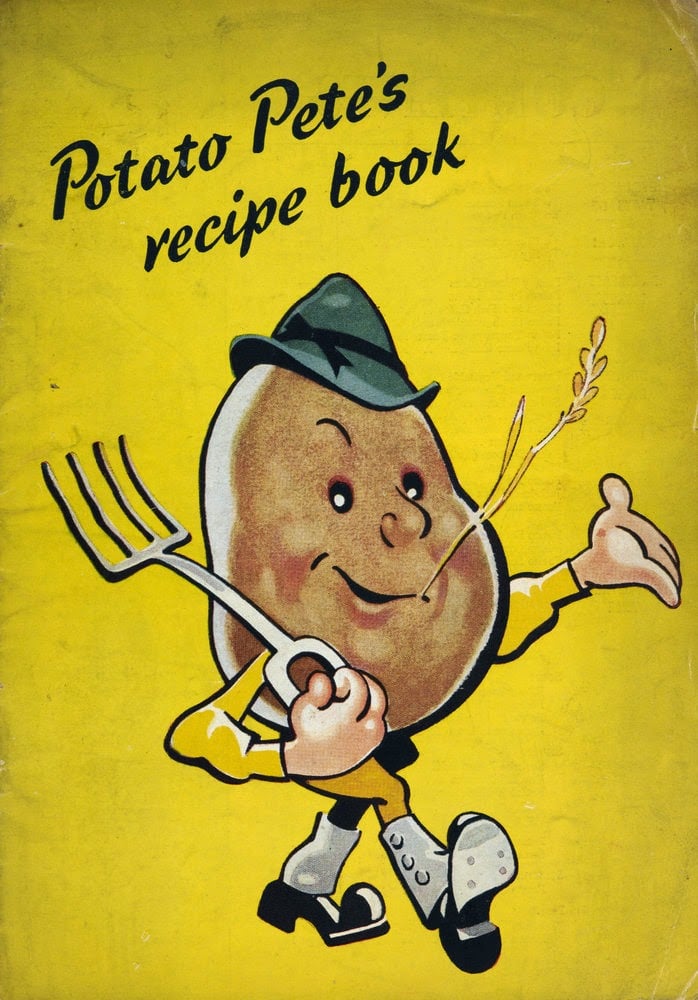
Gardens, allotments and pasture fields were all turned over to producing more food. There was plenty of advice given trhough talks and in leaflets to help inform people who had never grown produce before. These homegrown fruits and vegetables were to become incredibly important when other rations were so scarce.
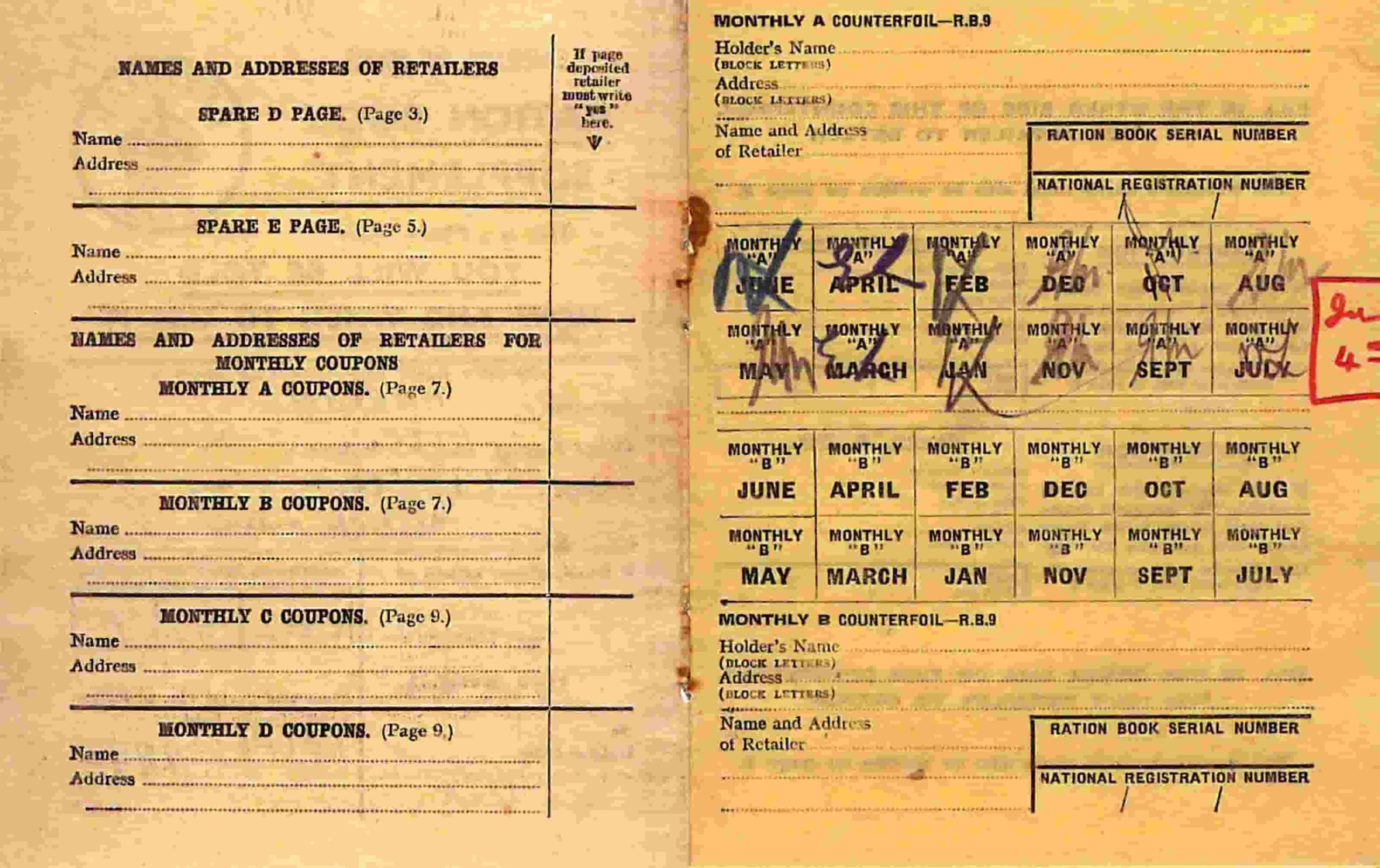
What were the rations for an adult?
Although these were the rations that an adult could claim, that didn’t mean that they were always available. Rations changed often throughout the years of the war depending on availability. Below you can see the weekly ration for one adult in 1940:
- Butter: 50g (2oz)
- Bacon or ham: 100g (4oz)
- Margarine: 100 g (4oz)
- Cooking fat/lard 100 g (4oz)
- Sugar: 225g (8 oz)
- Meat to the value of 1s 2d
- Milk 3 pints (1800ml) occasionally dropping to 2 pints (1200 ml)
- Cheese 50 g (2oz)
- Eggs: fresh 1 per week
- Dried eggs 1 packet (12 eggs) every 4 weeks
- Tea: 50g (2oz)
- Jam: 450g (1lb) every two months
- Sweets 350 g (12oz) every four weeks
Children under 6 years old had extra milk, eggs, orange juice and cod liver oil in their ration to help them grow. There were also extra rations allocated for preganant women and people who did heavy work like miners and farm workers.
When did rationing end?
Although WW2 ended in 1945, rationing was not over, and meat was finally de-rationed in1954, nine years after the war ended.
Ration Book Recipes
The ration book recipes I’m sharing here are ones that I have tried and tested, and in some cases I’ve adapted them to modern ingredients and cooking methods.

I consulted a number of sources when researching WW 2 ration book recipes these included:
- The Imperial War Museum
- We’ll Eat Again by Marguerite Patten OBE
- The Wartime Kitchen Garden by Jennifer Davies
- Spuds, Spam and Victory: Rationing in the Second World War by Katherine Knight
brilliant recipe collection, I’ve tried quite a few now – the parsnip gratin is a definite highlight.
Thank you. I hope to add to the collection as this era in food fascinates me.
This was an interesting read and got me thinking about my granny, her vegetable soup was very similar to the recipe here. She was a fantastic cook and could make a little go a long way. I always thought that was because she’d a large family to feed during rationing.
I think our grannies had to be very resourceful and waste nothing. My Mum always kept string off parcels and paper bags, that was definitely a war time hangover.
Such a lovely collection of recipes that I’m working my way through. They’re tasty and I love reading about the history too.
Thank you, good to hear you liked reading about the history as well as the recipes.
Where can I order the book? I would like to give it to my British friend for Christmas.
Thank you.
Hi Beth, I’m not sure which book you mean. All the recipes are published here on my website but I don’t have a physical book for sale.
Love this feature, Janice, thank you. I found a recipe book from the early 50s in my granny’s house after she passed and I love it. Simple ingredients turned into delicious savoury and sweet dishes.
Thanks Jayne. Our grandmothers knew what they were doing!